![Sales Leaderboards: The Complete 2026 Guide [+ Best Software]](https://spotio.com/wp-content/uploads/2025/04/SPOTIO-Blog-Sales-Leaderboard-Awards--1024x512.jpg)

Your reps are scattered across territories, logging visits, knocking doors, and chasing pipeline — but do they know where they stand? A sales leaderboard turns performance data into a live scoreboard that answers that question every single day. Teams that run them see measurable results: 89% of employees say they would be more productive if their work was more gamified, and a Harvard Business School study found gamified sales training drove a 35.8% rise in overall sales.
This guide covers everything field sales managers need to know about sales leaderboards — what they are, the best software options for 2026, how to set one up that actually works, and the rewards that keep reps competing hard.
What Is a Sales Leaderboard?
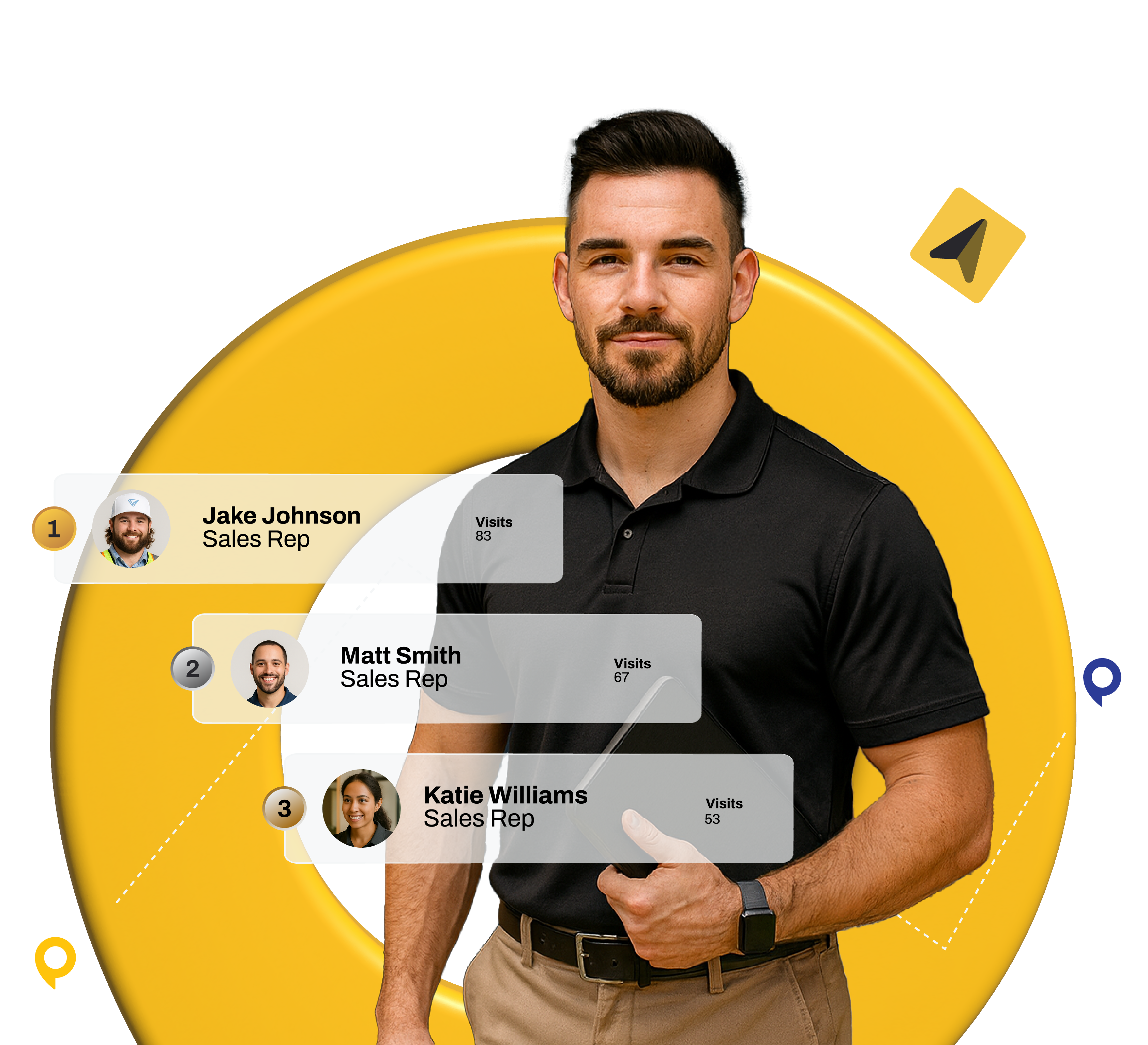
A sales leaderboard is a real-time performance ranking tool that displays how individual reps or teams stack up against each other on key sales metrics. You pick the KPIs that matter most to your business, and the leaderboard does the rest — ranking, displaying, and updating results automatically.
Here’s a practical example. You manage a field sales team tracking three metrics: leads contacted, lead-to-opportunity conversion rate, and total revenue. In month one:
- Jack contacts 100 leads
- Jill contacts 85 leads
- Bob contacts 80 leads — but outperforms both in conversion rate and revenue
Month two, Jill pushes to 120 leads, surpassing Jack’s 110. The leaderboard makes this visible to everyone in real time — which is exactly what drives the behavior change. No manager pep talk required.
Sales leaderboards are also the most visible element of a broader sales gamification strategy. Gamification applies game mechanics — competition, achievement, and recognition — to the sales process to drive consistent activity. The leaderboard is where reps see the score. For a full breakdown of how to build a gamification program around your leaderboard, see our complete guide to sales gamification.
Why Sales Leaderboards Work
They Motivate Reps to Push Harder
89% of employees say they would be more productive if their work was more gamified — a finding consistent across gender, age, and industry. Leaderboards tap directly into this — no rep wants to see their name at the bottom of a visible ranking. That visibility drives more visits, more calls, more follow-ups. More activity means more pipeline. It’s that direct.
They Build Accountability Without Micromanagement
When rankings are public, reps take ownership. Most will put in extra hours, attend optional training, or sharpen their pitch to move up the standings — without a manager pushing them. Accountability becomes self-directed, which is exactly what field sales leaders need when their teams are spread across territories.
They Boost Productivity
Research consistently links gamified performance tracking to measurable productivity gains. A Harvard Business School study (Buell, Cai & Sandino, 2023) found that gamified training led to a 35.8% rise in overall sales and a 22.3% boost in client interactions. When reps can see exactly where they stand and what they need to do to move up, they act on it.
They Accelerate Revenue Growth
Motivated, accountable, productive reps close more deals. Companies that implement gamification tools including leaderboards report up to a 59% increase in rep activity and a 30% increase in the bottom-line sales margin. That outcome doesn’t happen by accident — it happens because leaderboards create a culture where performance is visible, recognized, and rewarded.
8 Best Sales Leaderboard Apps for 2026
Not all leaderboard tools are built the same. Here’s a quick comparison before the full breakdowns. Click a tool name to jump to its detaile description.
| Tool | Best For | G2 Rating | Key Differentiator |
|---|---|---|---|
| SPOTIO | Field sales teams | 4.5/5 | Built for outside sales; native SalesScreen integration |
| SalesScreen | Gamification depth | 4.8/5 | TV dashboards, celebration feeds, deep contest builder |
| Spinify | AI-powered coaching | 4.6/5 | AI coaching tips tied to leaderboard performance |
| Ambition | Enterprise teams | 4.6/5 | Slack/Salesforce integration, coaching programs |
| LevelEleven | Salesforce-native teams | 4.4/5 | Deep Salesforce integration, behavior-based tracking |
| Plecto | Visual KPI dashboards | 4.2/5 | Multi-system data visualization on any screen |
| Hoopla by Raydiant | High-energy office teams | 4.2/5 | Live sports-style TV broadcast format |
| Mindtickle | Sales enablement + coaching | 4.7/5 | Combines leaderboards with training and skill tracking |
1. SPOTIO
Best for: Field sales teams of 5 or more reps selling door-to-door (B2C) in industries such as telecom, roofing, storm restoration, and home improvement, or B2B industries such as distribution, manufacturing, financial services, commercial construction, and medical device/pharmaceuticals.
G2 Rating: 4.5/5
SPOTIO is the field sales platform built for teams that sell in the field. Leaderboards in SPOTIO track any metric that matters to your team — door knocks, meetings set, pipeline moved, or revenue closed — and update in real time so managers and reps always have an accurate picture of where things stand.
Key Capabilities:
- Customizable contests: Instantly build leaderboards for any field metric — door knocks, meetings set, pipeline moved, or revenue closed — with no complex setup required
- 360° performance view: Combines field activity data with CRM deal data through real-time, bi-directional sync for unified leaderboard rankings that are always accurate
- Mobile-first access: Reps check standings and get leaderboard notifications from the field via the SPOTIO mobile app — not just from a desktop or office screen
- SalesScreen integration: SPOTIO connects natively with SalesScreen — gamify field activity and celebrate wins on the big screen, with field data flowing directly from SPOTIO into SalesScreen’s live competitions, TV dashboards, and celebration feeds
- One-tap activity logging: Reps log field activities with one tap, keeping leaderboard data accurate and current
2. SalesScreen
Best for: Real-time performance tracking and full gamification programs
G2 Rating: 4.8/5
SalesScreen combines live performance tracking with a full gamification suite — leaderboards, contests, celebration feeds, and TV dashboard displays — designed to keep teams focused and recognize wins publicly. It integrates with major CRMs including Salesforce and HubSpot.
Key Capabilities:
- Customizable dashboards: Track any KPI combination across individuals and teams
- Automated contests: Build and run competitions without manual administration
- TV display integration: Broadcast leaderboards and achievement alerts on office screens
- Celebration feeds: Public recognition moments triggered by milestones
3. Spinify
Best for: AI-powered gamification and coaching
G2 Rating: 4.6/5
Spinify layers AI-driven insights on top of gamification to give managers coaching signals they’d otherwise miss. Leaderboards in Spinify don’t just show rankings — they surface which reps need help and suggest what kind.
Key Capabilities:
- Head-to-head competitions: Reps challenge each other directly
- Custom game formats: Variety keeps engagement from plateauing
- AI coaching tips: Performance-based recommendations tied to leaderboard data
- Unified KPI dashboard: All essential metrics in one view
4. Ambition
Best for: Enterprise-level sales organizations
G2 Rating: 4.6/5
Ambition is a comprehensive sales coaching and performance platform built for enterprise teams. Its leaderboards integrate with Slack, Salesforce, and communication platforms so rankings are visible wherever reps work.
Key Capabilities:
- Multi-platform leaderboards: Access rankings on desktop, mobile, Slack, and Salesforce
- Milestone alerts: Automatic notifications when reps hit achievement thresholds
- Activity + objective tracking: Monitor both leading and lagging indicators
- Integrations: Gong, Outreach, Salesloft, Salesforce, Slack
5. LevelEleven
Best for: Coaching Salesforce-native sales teams
G2 Rating: 4.4/5
LevelEleven’s motivate module puts leaderboards and gamification directly inside Salesforce, making it the natural choice for teams that live in that CRM. Managers can track any behavior, metric, or KPI and build contests around specific activities they want to drive.
Key Capabilities:
- Salesforce-native: Runs inside your existing CRM workflow
- Custom contests: Incentivize specific behaviors, not just outcomes
- Real-time leaderboards: Instant performance visibility
- Behavior tracking: Track leading indicators that predict revenue
6. Plecto
Best for: Visual KPI tracking across multiple systems
G2 Rating: 4.2/5
Plecto visualizes performance data from across your tech stack — CRM, support tools, marketing platforms — and displays it on any screen. Its gamification features add contests and recognition on top of dashboards.
Key Capabilities:
- Multi-system integration: Pull data from all your tools into one view
- Any-screen display: Dashboards on TVs, desktops, or mobile
- Instant reporting: Generate reports in seconds
- Gamified contests: Leaderboards with rewards and recognition built in
7. Hoopla by Raydiant
Best for: High-energy office and inside sales teams
G2 Rating: 4.2/5
Hoopla brings the energy of live sports broadcasts into the sales floor. It automates leaderboard displays on office TVs, triggers real-time achievement alerts, and runs team and individual competitions with dynamic visuals.
Key Capabilities:
- Automated TV displays: Leaderboards broadcast continuously without manual updates
- Custom competition builder: Individual and team challenge formats
- Real-time achievement alerts: Instant recognition when reps hit goals
- CRM integrations: Salesforce, HubSpot, and others
8. Mindtickle
Best for: Combining sales enablement with leaderboard performance
G2 Rating: 4.7/5
Mindtickle is primarily a sales enablement platform, but its leaderboard and gamification features make it a strong choice for teams that want to connect training and coaching to performance rankings. Reps improve their skills and see the impact on the leaderboard.
Key Capabilities:
- Gamified learning: Skill development tied to performance rankings
- Performance-based leaderboards: Rankings driven by training completion and sales results
- AI coaching recommendations: Tailored guidance based on performance data
- CRM integrations: Connects with major platforms
How to Set Up an Effective Sales Leaderboard
Getting a leaderboard running takes less than an hour with the right tool. Getting one that actually changes behavior takes a few more decisions upfront.
Step 1: Pick 1–3 Metrics Only
More metrics equal less focus. Pick the KPIs that most directly drive revenue for your team right now. For field sales teams, the strongest leading indicators are visits completed, meetings set, and pipeline moved — not just closed revenue, which lags weeks behind actual effort.
Step 2: Make It Mobile and Visible
Your reps aren’t at a desk. If the leaderboard only lives on an office screen, field reps are out of the loop. Use a platform that sends mobile notifications and lets reps check standings from the road. Post it on your office TV too — visibility in both directions keeps engagement high.
Step 3: Set a Contest Window
Open-ended leaderboards lose urgency fast. Run defined contests with a clear start, midpoint, and end. Weekly sprints work well for activity metrics; monthly windows suit revenue targets. Announce results publicly and reset regularly so the same three reps don’t dominate every cycle.
Step 4: Connect Recognition to Rankings
A leaderboard without a payoff is just a spreadsheet. When a rep moves up, celebrate it — on the TV feed, in Slack, or in the team meeting. Recognition is the mechanism that turns a ranking into motivation.
Sales Leaderboard Best Practices
One thing every experienced sales leader eventually learns: a leaderboard won’t fix a broken culture — but it will make the culture you already have impossible to ignore. Design accordingly.
Create Multiple Ways to Win
If your leaderboard only ranks total revenue, your top performers dominate and everyone else disengages. Your middle 60% will tune out faster than your bottom 10% — they’re close enough to the top to feel the gap, but far enough away that competing feels pointless. Design specifically for them: build in categories like most improved, highest conversion rate, and most consistent activity so more reps have a realistic shot at recognition.
One more thing: if your contests only track closed revenue, you’re inviting sandbagging. Reps who hold deals to win next month’s contest are rational — they’re just optimizing for the wrong window. Run leaderboards on activity metrics (visits completed, meetings set, pipeline moved) alongside revenue, and the incentive to game the timing disappears.
Keep Rankings Fair
Territory size, tenure, and lead quality all affect what’s achievable. A rep covering a rural territory with smaller accounts shouldn’t be compared raw against someone in a dense urban market. Quota-adjusted or activity-based rankings create fairer competition.
Balance Individual and Team Competition
Individual rankings drive personal performance. Team-based contests drive collaboration and protect culture. Run both formats in rotation — individual sprints for activity, team challenges for bigger revenue targets. Pairing top performers with newer reps in team contests also builds your bench.
Refresh Contest Formats Regularly
The same contest format every month gets stale by month three. Rotate structures: head-to-head brackets, team relays, milestone-based races. Variety keeps the leaderboard feeling like a new challenge rather than a familiar routine.
10 Sales Leaderboard Reward Ideas
The right reward amplifies every leaderboard contest. Here are ten that work across field sales teams — mix and match based on what drives your specific reps.
Individual Rewards
- Floating Trophy or Pinnacle Award — A rotating physical or digital trophy that transfers to each new leader, keeping competition continuous
- Extra PTO — Paid time off during slower periods is consistently rated among the most valued non-cash rewards
- Boss for the Day — Top performer shadows or steps into a leadership role for a day
- Upscale Dining Experience — A restaurant gift card or team dinner with senior leadership
- Personalized Experiences — Spa days, golf rounds, cooking classes, or concert tickets tailored to the individual
- Premium Subscriptions — Streaming, fitness apps, or professional development courses
Team-Based Rewards
- Wall of Fame Recognition — Public celebration in the office, company newsletter, or social media
- Buddy System Bonus — Pair top performers with developing reps; reward both when the newer rep hits a milestone
- Shared Experience Days — Team dinners, escape rooms, or off-site activities that the whole group earns together
- Mentor-Mentee Rewards — Experienced reps earn recognition for developing rookies — reinforces coaching culture while keeping veterans engaged
Frequently Asked Questions
What is a sales leaderboard?
A sales leaderboard is a real-time ranking tool that displays individual or team performance on selected KPIs — visits, meetings, pipeline, revenue, or any metric your business tracks. It creates visible competition, drives accountability, and gives managers an instant performance snapshot without running reports.
What’s the difference between a sales leaderboard and sales gamification?
A sales leaderboard is the scoreboard — it shows who’s winning and by how much. Sales gamification is the whole game. A full gamification program layers in contests, achievement badges, point systems, reward shops, and celebration moments on top of the leaderboard. Think of the leaderboard as the most visible piece of a larger motivation engine. For the full breakdown, see our complete guide to sales gamification.
Does SPOTIO integrate with sales gamification tools?
Yes. SPOTIO integrates natively with SalesScreen, one of the leading sales gamification platforms. Field activity tracked in SPOTIO — door knocks, visits, appointments set, deals closed — flows directly into SalesScreen’s live competitions, TV dashboards, and celebration feeds. Your reps stay focused in the field; the gamification runs in the background. Learn more about the SPOTIO × SalesScreen integration.
What metrics should I put on a sales leaderboard?
Limit it to 1–3 metrics and prioritize leading indicators over lagging ones. For field sales teams, visits completed, meetings set, and pipeline moved are more actionable than closed revenue alone — they reflect effort today, not deals that closed six weeks ago. Lagging metrics like revenue work well for monthly contests where reps have a full cycle to influence the outcome.
Do sales leaderboards demotivate bottom performers?
They can, if the leaderboard only has one way to win. The fix is building multiple competitive categories so more reps can earn recognition — most improved, best conversion rate, highest activity consistency. Fairness also matters: normalize rankings for territory size and tenure so you’re comparing apples to apples. A well-designed leaderboard lifts the whole team, not just the top three.
Drive More Revenue with SPOTIO Leaderboards
Field sales teams that track performance visibly, celebrate wins publicly, and compete consistently close more deals. SPOTIO’s leaderboards are built for exactly that — tracking any field metric in real time, combining activity data with CRM results, and keeping every rep on your team focused on what moves the number.
Ready to see it in action? Request a demo of SPOTIO and we’ll show you how leading field sales teams use leaderboards to drive accountability, performance, and revenue.