
Ask almost any sales leader what quietly kills their pipeline, and you’ll hear the same thing: reps who don’t follow up consistently. Potential customers show clear interest, then disappear—not because the solution is wrong, but because nobody owned the next touch.
Whether you’re running B2B sales or working in B2C, in‑person field and door‑to‑door sales, disciplined follow-up is what separates your top rep from everyone else. The good news: with the right cadence, scripts, and tools, follow-up can feel structured instead of stressful—and actually become the easiest part of your process to execute.
In this guide, you’ll learn 11 sales follow-up strategies you can start using today, plus real-world scripts and examples from phone, email, and face‑to‑face selling.
The Importance of Sales Follow-Ups
Very few deals close on the first touch. Most buyers need multiple interactions to build trust, align stakeholders, and get internal approval—especially in B2B and considered B2C purchases. But most reps stop too soon, often after just one or two attempts, which means warm opportunities quietly die in their pipeline.
Structured, multi-touch cadences dramatically increase connect and conversion rates compared to ad‑hoc follow-up. When teams define a clear benchmark for how many touches they’ll make, which channels they’ll use, and when they’ll stop, follow-up becomes a repeatable system instead of a personal preference—and revenue becomes more predictable.
11 Ways To Improve the Sales Follow-Up Process
These 11 strategies work across B2B inside sales, field sales and door-to-door sales. Adapt the specifics (timing, channel mix) to your sales cycle and buyer.
1. Determine your benchmark
Before you can improve follow-up, you need to know what’s happening now. Start by calculating how many follow-up attempts your team makes per lead or opportunity on average, then compare that to how many touches it typically takes to win a deal in your world.
A simple benchmark formula is:
Total number of follow-up attempts ÷ total number of leads = average follow-up attempts per lead.
If your best reps consistently make 7–8 high‑quality touches before they either win or formally close out an opportunity, but your team average is 2–3, you’ve found a straightforward growth lever. Use this baseline to set an expected minimum follow-up standard per lead, and review it regularly as your process matures.
To go deeper on activity metrics, pair this with your sales activity tracking so you can see how follow-up attempts correlate with meetings and revenue.
2. Follow up on multiple channels
If you only follow up via email, you’re competing with hundreds of other messages in a crowded inbox. Many sales teams that rely on a single channel give up after a few ignored emails and assume the prospect isn’t interested, when in reality they’re just busy or prefer another channel.
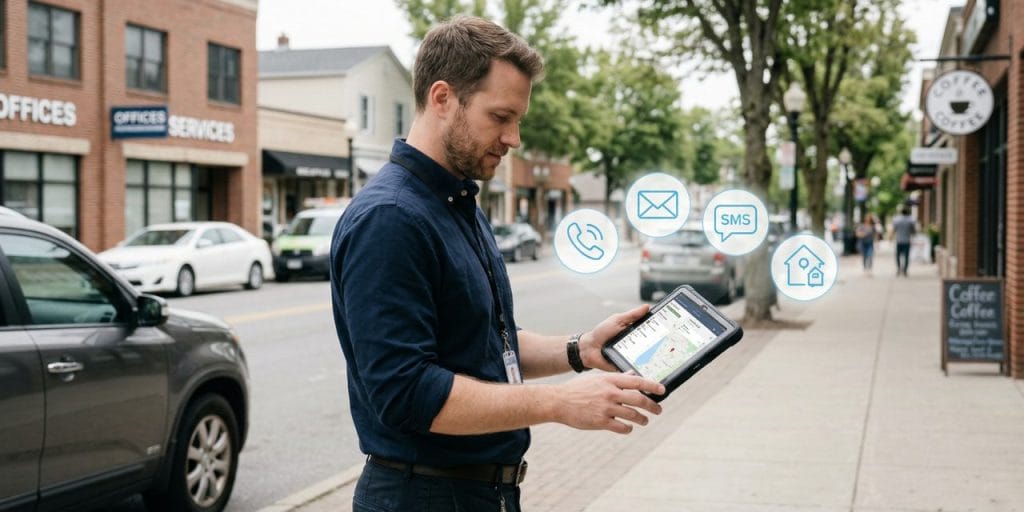
A multi-channel approach might blend email, phone, voicemail, SMS, social (e.g., LinkedIn), and, for field teams, in‑person visits. For example, you might send a recap email after a demo, then call the next day, send a quick LinkedIn message later in the week, and, for local accounts, drop by in person during a scheduled route if you have one.
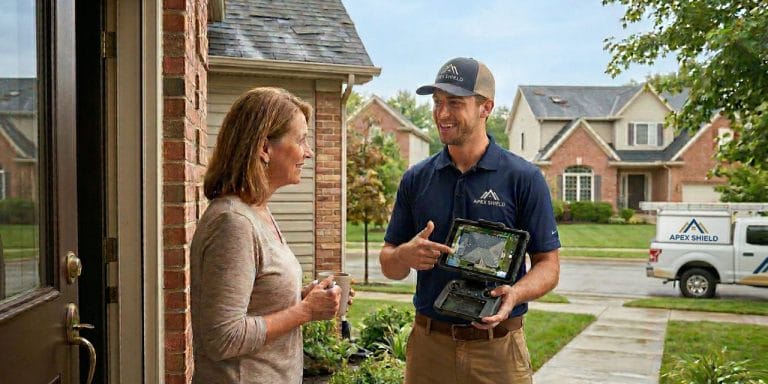
Field sales and door‑to‑door reps see this firsthand. In an interview with SPOTIO SEO Trey Gibson, outside sales coach Adam Bensman, (host of The Roof Strategist YouTube channel), explained that he teaches reps to treat every door knock as the start of a multi-channel follow-up sequence. If a homeowner isn’t ready to decide on the spot, he’ll secure permission for a “friendly follow-up call in a few days,” then continue the conversation over phone and text instead of hoping they’ll call him back.
For SMS in B2C and door‑to‑door contexts, make sure your program is opt‑in and compliant with TCPA/10DLC rules; an unapproved “friendly” text can become expensive if it violates local regulations.
3. Automate follow-up sequences
The fastest way to lose deals is to rely on memory and sticky notes. Automation doesn’t replace human connection, but it does make sure follow-up tasks actually happen, on time, with the right message and channel.
With tools like SPOTIO AutoPlays, you can build guided follow-up sequences that prompt reps through the next best actions once they enroll a prospect. A simple outbound sequence might look like this:
- Day 1 – Call + voicemail
- Day 1 – Email with recap and next step
- Day 3 – Email or SMS with a value-add resource
- Day 5 – Second call
- Day 7 – Social touch (e.g., LinkedIn) or additional value-add email
- Day 10 – Final “check-in” or “breakup” touch
You can also visualize this as a simple cadence table:
| Day | Channel | Action |
|---|---|---|
| 1 | Call + voicemail | First outreach after form fill/visit |
| 1 | Recap + clear next step | |
| 3 | Email or SMS | Value-add resource or reminder |
| 5 | Call | Second live attempt |
| 7 | Social (e.g., LinkedIn) | Light touch or value share |
| 10 | Check-in or soft “breakup” |
For field and door‑to‑door teams, reps can log a visit in SPOTIO, mark the outcome (e.g., “interested, talk to spouse”), and then enroll that contact in an AutoPlay so the follow-up call, reminders, and next-touch templates are scheduled and visible in their workflow instead of being left to chance.
If you’re designing a sequence from scratch, this guide on building a follow-up cadence that converts is a useful external reference.
4. Follow up fast
Speed matters. Responding or following up while interest is high dramatically increases your chances of connecting with decision‑makers and moving deals forward.
For inbound leads, aim to follow up within an hour when possible, and at least within the same business day. For B2B opportunities after a meeting or demo, send a recap and next steps within 24 hours so the conversation stays fresh. For field or door‑to‑door reps, the “fast follow-up” moment is often while you’re still on site: confirm the next step face‑to‑face, then log it immediately so the task is scheduled before you drive away.
5. Keep it short
Busy buyers don’t have time to read long emails or sit through meandering calls. The goal of a follow-up is to earn the next step, not to re‑pitch your entire solution.
As a rule of thumb:
- Emails: aim for 5–8 crisp lines that reference the previous conversation, deliver one clear value point, and propose a specific next step.
- Calls: plan a 2–3 bullet agenda and keep most follow-up calls under 10 minutes unless you’ve scheduled a deeper working session.
Instead of “just checking in,” anchor your outreach to something concrete: a decision deadline, a new stakeholder, a specific outcome discussed, or a resource you promised to send. You’ll find examples in articles with follow-up email templates that get responses, which you can adapt to your voice and process.
6. Remind prospects of what’s at stake
Good follow-up doesn’t badger prospects; it helps them solve a problem they already acknowledged. Rather than “agitating pain” for its own sake, use your touches to reconnect them to the outcome they care about and how you can help them get there.
For example, instead of “Just checking in to see if you’ve had a chance to review the proposal,” try: “You mentioned that every week your team spends 10–15 hours on manual routing. This plan reduces that by at least half. Have you had a chance to review the numbers with your operations lead?” That kind of follow-up is about impact and results, not pressure.
7. End every interaction with a clear next step
The easiest time to schedule the next touch is while you’re still in the current one. Yet many reps end calls and meetings with “I’ll follow up soon,” which usually turns into vague, low‑priority outreach.
Instead, get specific:
- Confirm the date, time, and format of the next interaction (e.g., “Next Thursday at 10:30, 30‑minute Zoom with you and procurement”).
- Send the calendar invite on the spot while you’re still talking so it’s accepted before you hang up.
In field and door‑to‑door sales, this principle is just as critical. Adam shared a simple question he uses at the end of a visit: “Do you have any objection if I give you a friendly follow-up call in a few days?” Most homeowners are comfortable agreeing to a low-pressure check‑in, and he then books the specific day and time before leaving the property. By logging that commitment into SPOTIO or your CRM immediately, the follow-up becomes a scheduled, trackable activity instead of a mental note.
8. Map your cadence to the sales cycle
Too few touches and you miss opportunities; too many too quickly and you risk annoying buyers. The right cadence depends on your sales cycle length, deal size, and buying process.
A few guardrails:
- B2B deals with multiple stakeholders often benefit from 6–10 touches over 2–4 weeks, mixing email, phone, and social, with slower spacing later in the cycle.
- Shorter B2C and door‑to‑door cycles usually require a higher density of touches in the first few days after contact because decisions are made faster and memory fades quickly.
In his storm restoration work, Adam found that a structured follow-up cadence after each door knock—anchored by that friendly follow-up call and a few timely touches—was responsible for a significant share of his personal revenue, largely because he was one of the few reps who actually followed through on every interested homeowner. Use your own data, plus timing best practices, to refine similar patterns: track how many touches your wins receive, over what time span, and adjust your standard cadence accordingly.
9. Follow up from in-person and door-to-door visits
In-person conversations are powerful, but they’re rarely the end of the story. For field and door‑to‑door teams, the follow-up work actually begins while you’re still in front of the prospect.
One effective approach is to secure explicit permission for a future touch instead of leaving with a vague “call me sometime.” Adam’s script—“Do you have any objection if I give you a friendly follow-up call in a few days?”—uses a negative-agreement question that feels low-pressure yet creates a clear next step. Once the prospect agrees, capture their name, mobile number, and best time and channel to reach them, then log it immediately so it becomes part of your follow-up queue rather than a sticky note that goes missing.
The same principle applies in B2B field sales. When you wrap a first on‑site meeting and the prospect isn’t ready to move forward, pull up your calendar with them, confirm the next conversation, and enroll them in a follow-up sequence in SPOTIO or your CRM so that visit automatically flows into a structured set of next actions.
For more ideas on structuring in-person days so you can support consistent follow-up, see our field sales and door-to-door sales guides.
10. Hold reps accountable
Even the best follow-up strategy fails if nobody follows it. Reps need to know that follow-up volume, timing, and quality are visible and matter just as much as meetings booked or deals closed.
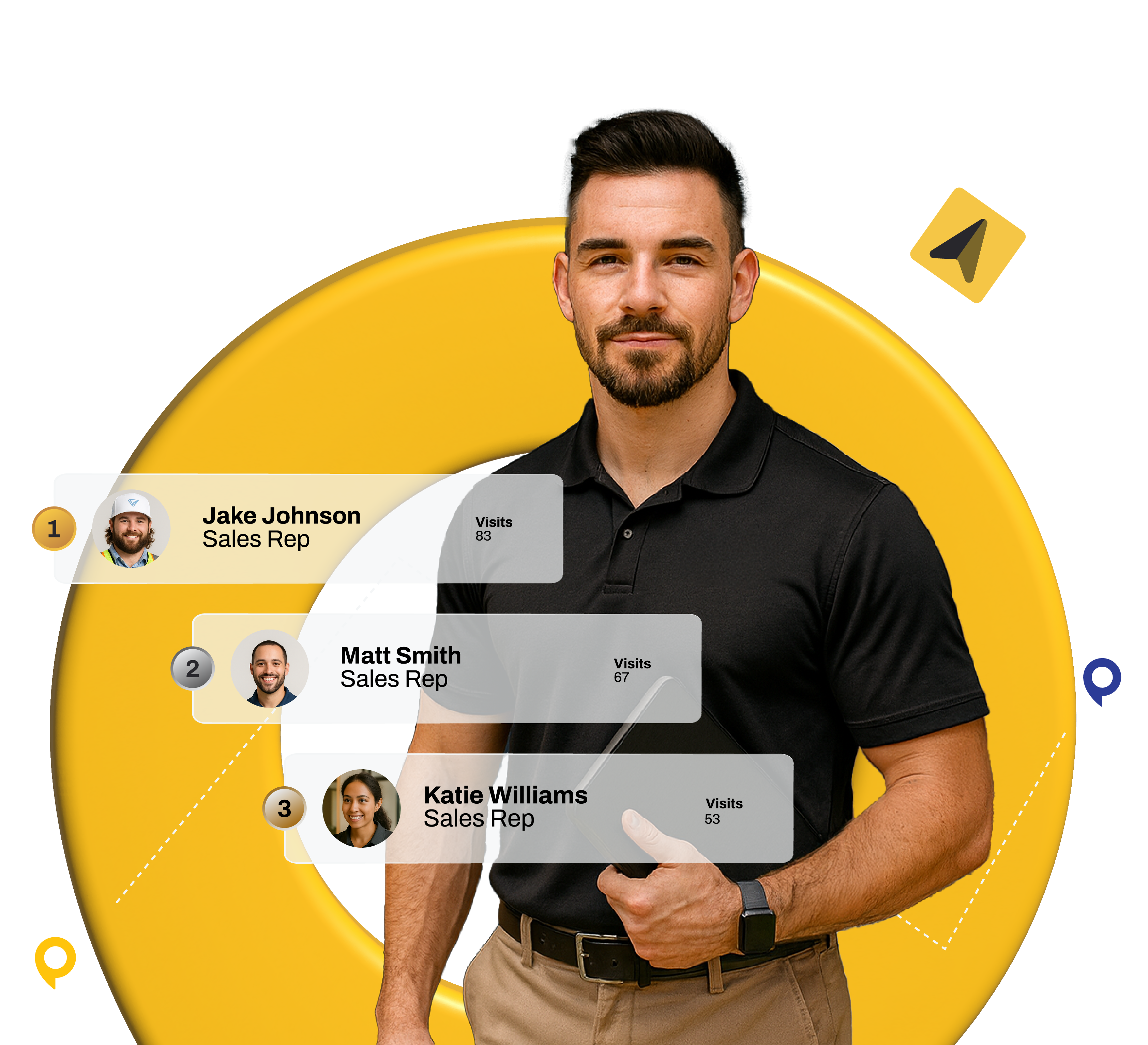
Sales activity tracking tools make it easier for leaders to:
- Set clear SLAs for follow-up (e.g., first touch within 24 hours, minimum of 6 touches before closing out).
- Track follow-up tasks completed on time by rep, team, and territory.
- See which cadences, channels, and scripts correlate with higher conversion rates.
To connect territory view and accountability, pair this with your territory mapping so you can see where follow-ups are happening and where they’re missing. Coaches like Adam often notice that the highest‑earning reps aren’t necessarily the most charismatic—they’re the ones who reliably execute the follow-up plan every time. Use your reporting to highlight and coach to that behavior, not just end‑of‑month results.
11. Track and refine the follow-up process
Follow-up isn’t “set and forget.” The most effective teams continuously test and refine their cadences, scripts, and channels based on data.
Questions to ask regularly:
- Which channels are generating the most replies or meetings for different segments (new prospects vs. existing customers, inbound vs. outbound)?
- Which subject lines, call openings, and talk tracks produce higher response and conversion rates?
- How many touches do your wins actually receive, and is your current benchmark too high or too low?
Use your CRM and activity tracking to run simple experiments: adjust the timing of the second touch, test a new “value-add” email message, or insert a field visit between phone calls for certain territories. Then standardize what works into your sequences and playbooks.
If it’s clear a deal isn’t moving forward, use your final touch to politely close the loop and, where appropriate, ask “Is there anyone else in your network or on your team who might benefit from this?” That way even a no can turn into a new conversation or a referral.
How Technology Enhances the Follow-Up Process
Following up is critical, but it’s also tedious when done manually. The right tech stack removes busywork, closes data gaps, and keeps your entire team aligned on what needs to happen next.
Automate
With SPOTIO, sales reps can build custom follow-up sequences using AutoPlays that guide them through the right next actions once they enroll a prospect. You can tailor the touchpoints for each lead type and stage—whether it’s a new inbound lead, a field visit outcome, or a renewal opportunity—so prospects are consistently engaged and nothing slips through the cracks.
Capture
A significant share of CRM data is incomplete or inaccurate because reps don’t have time to log every call, visit, or text manually. SPOTIO supports one‑tap logging of field activities and attaches GPS‑verified location data to those activities, giving you a more complete view of what’s happening in the field with minimal extra effort. That means managers can trust the data when they evaluate follow-up performance.
Integrate
SPOTIO syncs activities and records with your CRM so every follow-up attempt is tied to the right account, contact, and opportunity. Reps always have context before their next touch—what was discussed, which channel was used, and what’s scheduled next—without jumping between tools or relying solely on memory.
Measure
SPOTIO’s sales tracking gives leaders a single view of key follow-up KPIs: daily, weekly, and monthly activity volume, follow-up completion rates, and outcomes by rep, team, and territory. You can see who is honoring the follow-up cadence, which plays are working, and where coaching or process changes are needed.
Embrace The Follow-Up
Follow-up isn’t glamorous, but it’s where most revenue is won or lost. The reps who consistently follow a thoughtful cadence, use multiple channels, and secure clear next steps—whether over Zoom or at the front door—are the ones who quietly stack up results.
With a clear strategy, proven scripts, and tools like SPOTIO to guide, log, sync, and measure every touch, your team can stop dreading follow-up and start treating it as the engine that powers your pipeline.
Frequently Asked Questions
Most sales teams see the best results when they follow up at least 5–8 times before considering a prospect unresponsive, using a mix of channels like email, phone, and, where appropriate, in‑person visits. For longer B2B cycles that involve multiple stakeholders, you may lean toward the higher end of that range, while simpler B2C or door‑to‑door decisions can often be resolved with fewer, more concentrated touches. Many reps give up after one or two attempts, which is exactly where disciplined teams gain an edge.
Early in the cycle, spacing touches 2–3 days apart keeps you present without feeling overwhelming, then you can extend to 4–7 days between later touches as deals progress. Shorter B2C and door‑to‑door cycles may justify more frequent follow-ups in the first week, while complex B2B deals usually benefit from slightly longer spacing and more stakeholder coordination.
For most outbound and mid‑funnel opportunities, 5–8 high‑quality touches over 2–4 weeks is a reasonable benchmark before you send a polite “breakup” message and move on. In B2B, that cadence may stretch longer if you’re coordinating multiple decision‑makers; in B2C and field sales, you’ll often compress the same number of touches into a shorter window. If a prospect clearly says “no” or indicates the timing is wrong, respect that, confirm whether you can check back later, and then remove them from your active cadence.
Focus every touch on relevance and value instead of pressure: reference their priorities, share a useful resource, or clarify the decision process instead of “just checking in.” Keep messages concise, avoid daily pestering, and clearly acknowledge when you’re nearing a final follow-up so prospects don’t feel trapped. If someone’s gone quiet, send a “re‑orientation” message that acknowledges the silence and gives them an easy out, for example: “If now’s not the right time, no problem—would you prefer I check back next quarter or close the loop for now?” That reduces guilt and makes it easier for them to reply honestly rather than keep avoiding you.
Research often shows that mid‑week (Wednesday–Thursday) and mid‑to‑late afternoon windows can perform well for phone calls, with some studies pointing to 3:30–5:00 pm as a strong calling block. For local B2C or door‑to‑door work, you may also find early evenings or weekends perform better, as long as you stay within local and company contact rules. That said, the “best” time depends heavily on your market and buyer; track your own response data and adjust your standard calling and emailing windows accordingly.
Yes. B2B cycles tend to be longer and involve more stakeholders, so cadences usually span weeks with more touches and channels like email, phone, and LinkedIn. B2C and door‑to‑door decisions often happen faster, so reps like Adam Bensman front‑load more touches in the first few days after an in‑person conversation and rely heavily on phone, SMS, and scheduled callbacks tied to that visit.
Use a CRM or sales execution platform rather than spreadsheets and memory. Tools like SPOTIO help reps log field activities with a tap, enroll prospects in AutoPlays, and sync data back to your CRM so every promised follow-up becomes a visible task in the system. That way, every “friendly follow-up call in a few days” you promise—on Zoom or at the front door—gets converted into something you can see, manage, and complete.