
Your canvasser sets an inspection on Tuesday. By Friday the homeowner has signed with someone else. The door notes lived in one app, the measurement in another, and the follow-up in a rep’s head.
That’s not a sales problem. It’s a software stack problem. In ServiceTitan’s 2026 survey of more than 1,000 roofing and exteriors companies, 75% expected revenue growth, but 39% named rising labor and overhead costs as a top threat. When margins are tight, every job lost between the door and production hurts.
This guide sorts the best roofing software by the job each tool does: field sales, CRM and production, measurement, proposals, storm data and crew time. For each one you get G2 ratings, starting prices and what to watch out for. Then we show three stacks that storm and retail teams actually run.
What Is Roofing Software?
Roofing software is any tool that runs part of a roofing business, from the first knock to the final invoice. No single platform does all of it well. Most roofing companies run a core system of record plus a few specialist tools around it.
Your production software tracks what happened on a job. A field sales tool drives what happens next on the street. The rest of the stack measures roofs, builds proposals, finds storms and tracks crew hours.
The Six Layers of a Roofing Stack
- CRM and production: the system of record. Jobs, estimates, material orders, scheduling and invoicing.
- Field sales and canvassing: the system of action. Territories, door history, follow-up and rep activity.
- Aerial measurement: roof area and pitch without a ladder.
- Estimates and proposals: turns measurements into a price the homeowner can sign.
- Storm data: where hail hit, how big, and when.
- Crew time tracking: who worked which job, and for how long.
Small shops often cover three layers with one tool. Storm restoration companies with dozens of canvassers usually need all six.
Roofing Software at a Glance
| Tool | Category | Best For | G2 Rating | Starting Price |
|---|---|---|---|---|
| SPOTIO | Field sales and canvassing | Roofing sales teams with 5+ reps | 4.5/5 (400 reviews) | Contact for pricing |
| AccuLynx | CRM and production | Insurance restoration operations | 4.4/5 (146 reviews) | Contact for pricing |
| JobNimbus | CRM and production | Retail and mixed-revenue contractors | 4.5/5 (169 reviews) | Contact for pricing |
| ServiceTitan | CRM and production | Large, multi-department contractors | 4.4/5 (388 reviews) | Enterprise pricing |
| Jobber | All-in-one for small shops | Owner-operators getting off paper | 4.6/5 (478 reviews) | From $49/month |
| EagleView | Aerial measurement | Insurance and storm measurements | 3.6/5 (14 reviews) | Per report |
| RoofSnap | DIY measurement and takeoffs | Contractors who measure in-house | Not rated on G2 | $13 per measurement |
| Roofr | Estimates and proposals | Fast measurement-to-proposal | 4.9/5 (46 reviews) | Free; paid from $109/month |
| HailTrace | Storm data | Finding and timing hail damage | Not rated on G2 | Contact HailTrace |
| Arcoro ExakTime | Crew time tracking | Hourly crews across job sites | Not rated on G2 | From $9/user/month |
How We Selected These Tools
We grouped tools by the job they do in a roofing business, because that’s how contractors actually build a stack. In each category, we looked at four things:
- roofing-specific features
- third-party ratings and review volume
- how well the tool connects to the rest of the stack
- pricing transparency
Some specialist tools have few reviews, and we say so where that’s the case.
Disclosure: SPOTIO is our product and appears first in this list. We’ve applied the same criteria (ratings, feature depth and fit for roofing workflows) to every tool, including our own.
Best Roofing Software by Category
Field Sales and Canvassing: SPOTIO
Best for: Roofing sales teams, from storm canvassing crews to retail reps, that want one place to manage leads, inspections, pipeline and follow-up.
G2 Rating: 4.5/5 (400 reviews)
Pricing: Contact SPOTIO for pricing. Minimum 5 users.
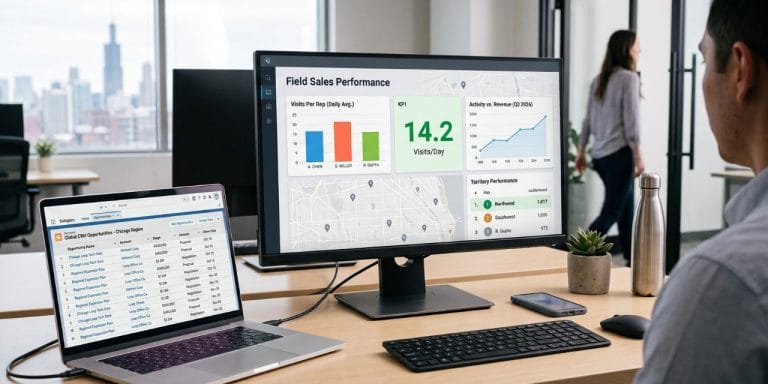
SPOTIO is field sales software for roofing teams that win jobs at the door. Your production software runs the job. SPOTIO drives the revenue that creates it: picking the neighborhood, working every door, and following up until the homeowner signs.
Key Capabilities:
- Storm territories: Pull HailTrace storm data onto the map, filter by hail size, wind speed and date of loss, then build territories around the hardest-hit streets and assign them to crews.
- Door history: Every door shows the result the last rep logged (Not Home, Interested or Come Back Later), so canvassers can see which doors were already worked before they knock.
- One-tap logging: Reps log a visit with one tap, or say it to DASH and tap to confirm. GPS coordinates are attached to every logged activity.
- Prospect discovery: Lead Machine filters homeowners using 15 data points, so reps can target the right houses in a swath.
- Guided follow-up: Reps enroll homeowners in AutoPlays, which prompt the next call, text or email after an inspection is set.
- DASH AI co-pilot: DASH preps visits with a quick record summary, builds records from a photo or voice note, and drafts emails and texts for reps to review and send. Reps confirm every change before it saves.
- Download My Day: Reps download their day and work offline for up to 24 hours, which matters when storms knock out cell service.
- Production handoff: AccuLynx connects natively through AppConnections. SPOTIO is a ServiceTitan Certified App with a native, two-way integration. JobNimbus connects through Zapier, where sync timing depends on how your Zap is set up. Job status flows back to SPOTIO, so reps know which neighbors are already under contract.
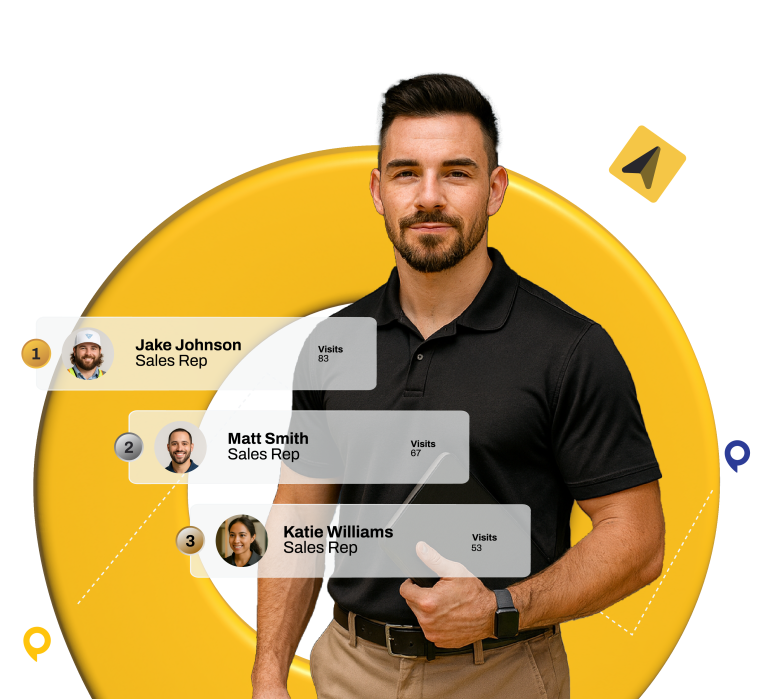
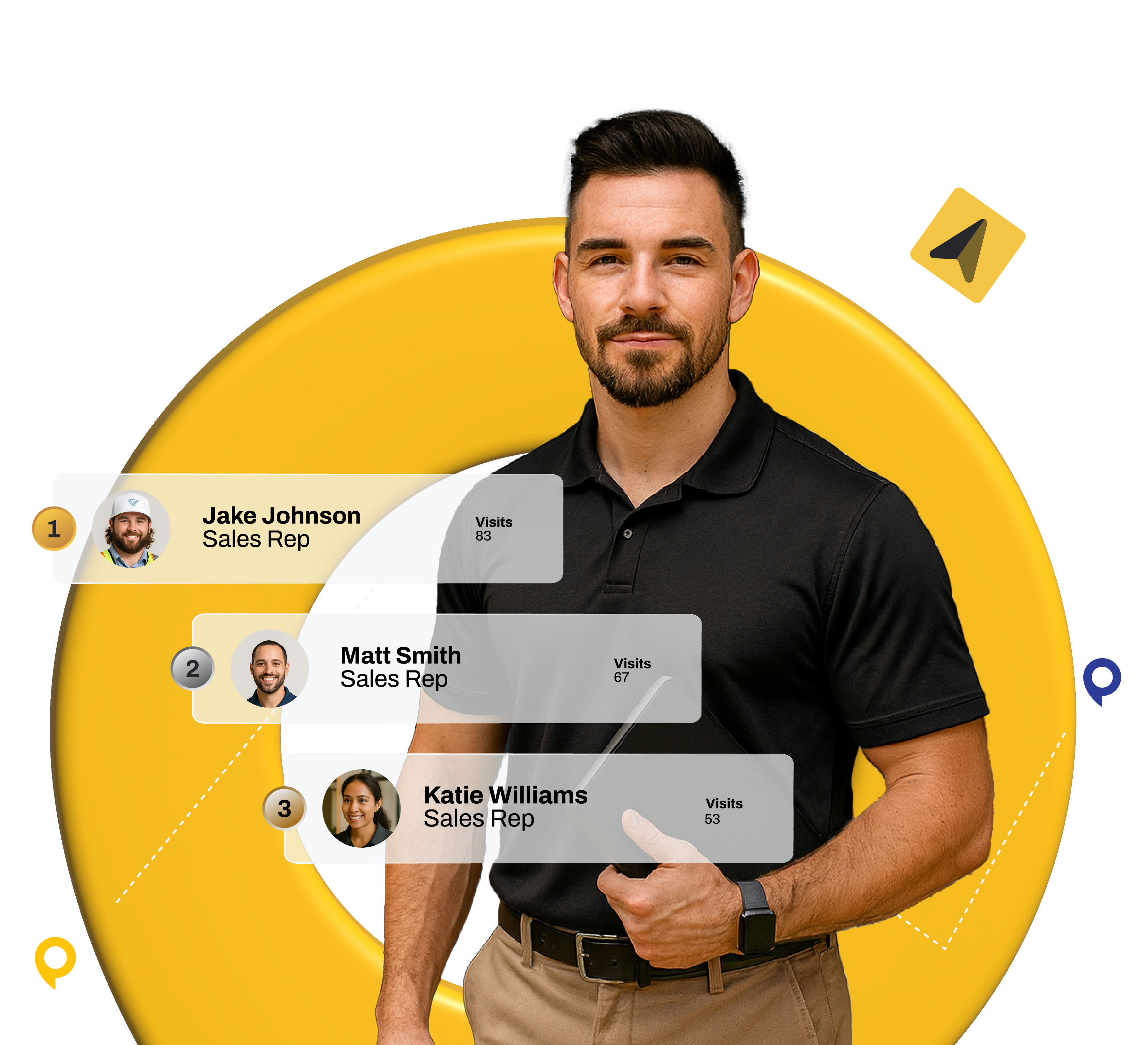
✅ What we like: The storm-to-territory workflow with HailTrace data. Door history shared across every rep. Leaderboards, plus Sales Gamification powered by SalesScreen (add-on), keep canvassers competing.
⚠️ Watch out for: The 5-user minimum rules out solo operators. SPOTIO doesn’t handle production work like material orders, crew scheduling or invoicing, so add a production system when you need those. HailTrace data needs your own HailTrace subscription.
Success story: Storm Guard runs 39 locations in 17 states. Before SPOTIO, field activity lived in reps’ notes. Now managers see which doors were worked and which need another knock. “What SPOTIO has done is allowed us to see where those successes were and multiply on them,” says Shane Lynch. Read the Storm Guard case study.
Learn how SPOTIO works as a roofing CRM for storm and retail teams.
CRM and Production: AccuLynx, JobNimbus, ServiceTitan
Every roofing company needs a system of record: the place where a signed job becomes an estimate, a material order, a crew schedule and an invoice. These three platforms lead the category. We compare them in depth, along with Leap, Roofr and HubSpot, in our guide to the best roofing CRM software.
AccuLynx
Best for: Insurance restoration operations with high job volume.
G2 Rating: 4.4/5 (146 reviews)
Pricing: Contact for pricing.
Overview: AccuLynx is built for the full job: estimating, supplier ordering, production scheduling and invoicing, with a workflow made for insurance claims.
✅ What we like: The deepest supplier and insurance workflow in the category.
⚠️ Watch out for: Add-on features raise the monthly cost as you grow.
JobNimbus
Best for: Growing retail and mixed-revenue contractors who want a flexible setup.
G2 Rating: 4.5/5 (169 reviews)
Pricing: Contact for pricing.
Overview: JobNimbus combines CRM and project management with boards you can set up your own way, a strong mobile app and QuickBooks sync.
✅ What we like: Easy to set up to match how you already work.
⚠️ Watch out for: It isn’t built to manage a canvassing team in the field.
ServiceTitan
Best for: Large contractors running roofing alongside gutters, siding or windows.
G2 Rating: 4.4/5 (388 reviews)
Pricing: Enterprise pricing.
Overview: ServiceTitan runs scheduling, dispatch, marketing ROI and financial reporting across departments and locations.
✅ What we like: Depth for multi-location operations.
⚠️ Watch out for: Cost and a phased rollout make it a big step for smaller roofing companies.
How the handoff works:
- A canvasser sets an inspection in SPOTIO.
- The closer signs the homeowner.
- When the record reaches the stage you’ve set as the trigger, the job moves into AccuLynx with door notes and damage photos attached.
- Job status flows back to SPOTIO, so the rep knocking next door knows that house is under contract.
Nobody retypes an address.
All-in-One for Small Shops: Jobber
Best for: Owner-operators and small crews (1–10 people) getting off paper.
G2 Rating: 4.6/5 (478 reviews)
Pricing: From $49/month for one user. Higher plans add users and automation.
Jobber is a general home services platform, not a roofing tool. It covers the basics well: quotes, scheduling, invoicing and payments. Setup is simpler than with roofing-specific platforms.
Key Capabilities:
- Quotes to invoices: Build a quote in the driveway and turn it into an invoice in a few clicks.
- Scheduling: Assign jobs to yourself or a crew and see the week at a glance.
- Reminders: Send appointment reminders and follow-ups by text or email.
- Payments: Take card payments online or on-site.
✅ What we like: Clean customer-facing quotes, simple setup, and a price small shops can handle.
⚠️ Watch out for: No roofing measurements, insurance workflow or canvassing tools. Growing storm teams outgrow it.
Aerial Measurement: EagleView
Best for: Storm and insurance work where you want a third-party measurement report.
G2 Rating: 3.6/5 (14 reviews)
Pricing: Per report. Pricing depends on report type and contract.
EagleView produces roof measurement reports from aerial imagery: area, pitch and roof geometry, without a site climb. Most roofing CRMs, including AccuLynx, JobNimbus and ServiceTitan, let you order reports from inside the job.
Key Capabilities:
- Measurement reports: Roof area, pitch and edge lengths from aerial imagery.
- Storm and insurance work: A common choice for restoration teams.
- CRM integrations: Order reports and pull measurements into estimates from your production system.
✅ What we like: No ladder, and a report your production team can work from.
⚠️ Watch out for: Per-report costs add up fast after a big storm. The G2 sample is small.
DIY Measurement and Takeoffs: RoofSnap
Best for: Contractors who want to measure roofs themselves and build takeoffs right away.
G2 Rating: Not rated on G2.
Pricing: $13 per measurement pay-as-you-go, or subscriptions from $105 per user per month. 7-day free trial.
RoofSnap lets you draw roof outlines over satellite imagery and calculate areas and material quantities from your own drawing. It sits between full-service aerial reports and climbing the roof with a tape measure.
Key Capabilities:
- Self-service measuring: Draw and measure roofs from high-resolution imagery.
- Material takeoffs: Calculate quantities from each measurement.
- Estimates: Build estimates and proposals from the takeoff.
- QuickBooks sync: Send invoices and job financials to QuickBooks.
✅ What we like: Low per-measurement cost and full control over the drawing.
⚠️ Watch out for: You do the measuring, which takes time to learn. CRM features are limited.
Estimates and Proposals: Roofr
Best for: Retail and storm teams that compete on how fast a proposal reaches the homeowner.
G2 Rating: 4.9/5 (46 reviews)
Pricing: Free Starter plan with $19 measurement reports. Paid plans from $109/month.
Roofr shortens the time between inspection and signature. It pairs measurement reports with an estimate builder and digital proposals homeowners can sign from their phone.
Key Capabilities:
- Measurement reports: Order roof reports without leaving the platform.
- Estimate builder: Turn measurements into line-item estimates from your own pricebook.
- Digital proposals: Branded proposals with e-signature.
- Job board: A simple pipeline for tracking jobs, included in the free plan.
✅ What we like: Measurement to signed proposal in one flow, at a low starting price.
⚠️ Watch out for: It isn’t built to manage large canvassing teams or production at scale.
“Roofr solves the biggest time and coordination problems in roofing — accurate measurements, fast proposals, and clear client tracking. Instead of juggling separate tools, I can handle everything from the client’s address to a signed proposal in one place.” — Verified G2 review
Storm Data: HailTrace
Best for: Storm restoration teams that need to know where hail hit, how big, and when.
G2 Rating: Not rated on G2.
Pricing: Subscription. Contact HailTrace.
HailTrace maps hail and wind events and keeps storm history by address. Teams use it to pick which neighborhoods to work after a storm, and to document the date of loss.
Key Capabilities:
- Storm maps: Hail size, wind speed and impact area for recent storms.
- Storm history: Look up past events by address or region to find unworked damage.
- Date of loss: Storm records tied to specific addresses for claim documentation.
- SPOTIO integration: See your HailTrace storm data on the SPOTIO map, where managers draw territories and assign crews.
✅ What we like: It turns “I think it hit north of town” into a map your crews can work.
⚠️ Watch out for: It’s a data tool. You still need a way to assign territories and track which doors got knocked.
Crew Time Tracking: Arcoro ExakTime
Best for: Roofing companies with hourly crews across multiple job sites.
G2 Rating: Not rated separately on G2. 3.6/5 (7 reviews) on Software Advice.
Pricing: From about $9 per user per month.
ExakTime answers one question: who worked where, and for how long. That data drives payroll and true job costs.
Key Capabilities:
- GPS clock-ins: Crews clock in and out with location tied to the job site.
- Job costing: Compare estimated vs. actual labor hours by job.
- Payroll export: Send timesheets to payroll and accounting.
- Compliance: Supports certified payroll and prevailing wage reporting.
✅ What we like: Labor data tied to each job, which most production platforms don’t track deeply.
⚠️ Watch out for: Few public reviews, and some reviewers question the value for the price.
Build Your Roofing Software Stack
There’s no single right stack. What you need depends on whether you chase storms or sell retail, and how many reps you put on doors.
The Storm Restoration Stack
- SPOTIO: Territories, door history, follow-up and rep activity.
- HailTrace: Where hail hit and when.
- EagleView: Third-party measurement reports.
- AccuLynx: Production, supplements and invoicing.
How it runs:
- For example, HailTrace shows a 2.25-inch hail swath across the north side of town.
- A manager filters the storm data in SPOTIO and draws territories around the hardest-hit streets.
- Crews get their territories on their phones.
- Canvassers work every door and set inspections.
- Closers sign the homeowner.
- The job moves into AccuLynx with notes and photos attached.
One roofing team we work with found its reps knocking the same doors before they set clear territories. Shared door history ended that. For the full playbook, see our storm territory management guide.
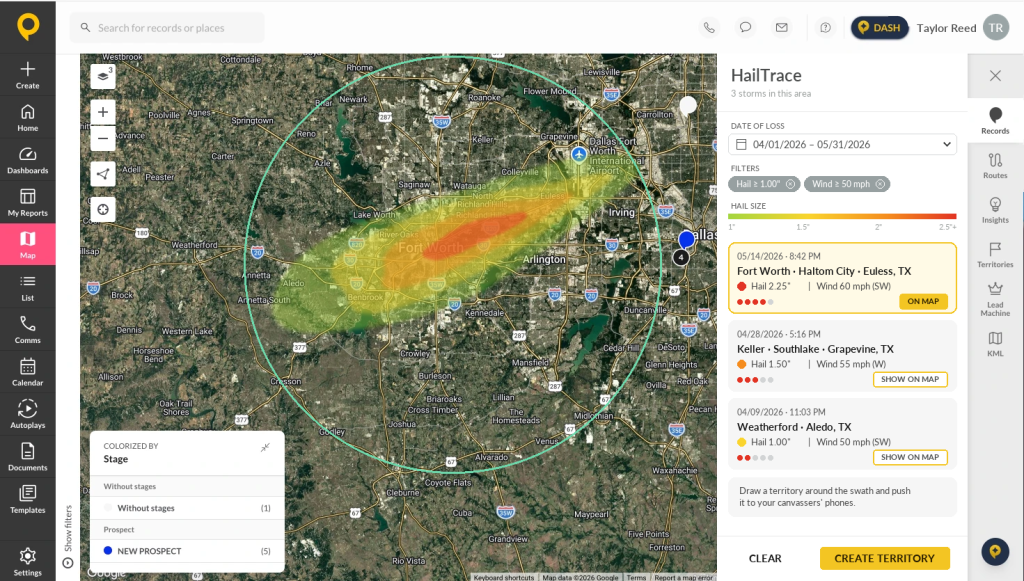
SPOTIO map showing a HailTrace hail swath
The Retail Replacement Stack
- SPOTIO: Neighborhood canvassing, referrals and year-round follow-up.
- Roofr or RoofSnap: Fast measurements and proposals.
- JobNimbus: CRM, production and QuickBooks sync, connected to SPOTIO through Zapier.
Why it works: Retail leads come from the homes around jobs you’ve already roofed. Door history and pins for past jobs (imported or synced from your CRM) show reps where to knock in the off-season. Fast proposals close the homeowner before they call three other contractors.
The Small Crew Stack
- Jobber: Quotes, scheduling, invoicing and payments.
- RoofSnap: Pay-as-you-go measurements, so you only pay on jobs you bid.
- HailTrace: Optional, if you work storms.
Why it works: Low fixed monthly cost, with measurement costs that rise and fall with your job count. When you add a canvassing team, add a field sales layer instead of replacing everything.
Want the bigger picture? See how storm and retail teams run their field sales in The State of B2C Field Sales 2026.
How to Choose Roofing Software
Start with what’s breaking:
- Estimates sitting for three days? Fix measurement and proposals first.
- Jobs slipping after the sale? You need a stronger production system. See our roofing CRM comparison.
- No idea what your reps did today? You need a field sales platform.
Commercial roofers have different needs: blueprint takeoffs, bids and project management. Most tools on this list are built for residential work. If you’re adding commercial, start with building a commercial roofing program.
Five Questions to Ask Before You Buy
- Does it work offline? Storms knock out cell towers. Test every field app in airplane mode, then check that notes and photos sync when the signal comes back.
- Will new canvassers use it? Storm crews turn over fast. If a new rep can’t log a door on day one, the data won’t be there when you need it.
- Where does data get retyped? Trace one job from first knock to final invoice. Every place someone re-enters an address is a place jobs get lost.
- What does it cost at your size? Ask for per-user pricing, minimum seats, onboarding fees and per-report costs.
- Does it connect to QuickBooks? If job financials don’t reach accounting, your office team does it by hand.
Frequently Asked Questions
Most roofing companies run a CRM that tracks every homeowner and job, plus a few specialist tools around it. Some use a production platform like AccuLynx, JobNimbus or ServiceTitan as their CRM. Others start with SPOTIO, which tracks leads, inspections, pipeline and follow-up for storm and retail teams, and connects to a production system when they need one. The common add-ons are aerial measurement (EagleView or RoofSnap), proposals (Roofr), storm data (HailTrace) and crew time tracking (ExakTime).
It ranges from free to enterprise contracts. Roofr has a free Starter plan, Jobber starts at $49 a month, RoofSnap charges $13 per measurement, and ExakTime starts around $9 per user per month. Roofing CRMs like AccuLynx and JobNimbus, and field sales platforms like SPOTIO, quote by team size. Budget for per-user fees, measurement reports and onboarding, not just the base plan.
Not always. SPOTIO can be your CRM on its own: it tracks homeowners, inspections, pipeline and follow-up, and it gives canvassing teams territories and door history too. You need a separate production system when you’re ready for material orders, crew scheduling and invoicing. At that point, SPOTIO connects to AccuLynx, JobNimbus or ServiceTitan, so signed jobs move into production without retyping.
For a solo operator or small crew, Jobber is the easiest place to start. It handles quotes, scheduling, invoicing and payments, and it starts at $49 a month. Add RoofSnap for pay-as-you-go measurements. When you hire canvassers or start working storms, add a roofing CRM and a field sales tool rather than forcing Jobber to do both jobs.
Most roofing CRMs and job management tools sync with QuickBooks, including JobNimbus, AccuLynx, Jobber and RoofSnap. Check what syncs: invoices only, or payments, job costs and customers too. Test the sync with a few real invoices during your trial. A broken sync means your office team re-enters every job by hand.
Some does, and it matters more than most buyers expect. After a storm, cell service can be spotty for days. SPOTIO’s Download My Day lets reps download their territory and work offline for up to 24 hours, then sync when they reconnect. Test every field app in airplane mode before you buy.
Put Your Stack to Work
The best roofing software stack is the one where nothing gets retyped and no door gets knocked twice. Pick a strong system of record, add the specialist tools your work needs, and give your reps a field sales platform built for the door.
SPOTIO works alongside AccuLynx, JobNimbus and ServiceTitan, so signed homeowners move into production with the field notes attached. Storm Guard uses it to see which doors were worked across 39 locations.
See how SPOTIO works for your roofing sales team.

Trey Gibson is the founder and CEO of SPOTIO, where he helps sales leaders build more efficient, high-performing field sales teams. With a background in entrepreneurship and as the founder of a roofing company, Trey brings hands-on experience leading door-to-door and B2B sales organizations. He combines real-world sales leadership with a passion for technology and operational efficiency to help teams scale, perform, and win more deals.
Research and drafting assisted by AI tools; all content is reviewed, fact-checked, and approved by Trey and the SPOTIO editorial team.