
Your reps are spending more time on admin than you think. Our State of Field Sales survey found that reps spend just 43% of their time actually selling. Another 21% disappears into administrative tasks and data entry. For a team of 20 reps, that’s roughly the equivalent of four full-time people doing paperwork instead of knocking doors.
Meanwhile, the market isn’t slowing down. Homeowner spending on improvements is projected to reach $518 billion by the end of 2026, according to the Harvard Joint Center for Housing Studies. The opportunity is there — the question is whether your team is structured to capture it.
This playbook is built for field sales leaders managing canvassing and closing teams in roofing, windows, siding, HVAC, and general remodeling. It covers the process, tactics, and coaching habits that separate teams growing revenue from teams treading water. If you manage a door-to-door sales operation in home improvement, this is the framework.
Build a Repeatable Home Improvement Sales Process
The biggest gap between high-performing home improvement sales teams and everyone else isn’t talent — it’s process. When every rep runs a different playbook, you can’t diagnose what’s broken, and you can’t scale what works.
Define Your ICP at the Neighborhood Level
Most home improvement field sales leaders have a general ICP. But “homeowners who need a new roof” doesn’t help a canvasser decide which streets to work first.
An effective ICP for this industry needs neighborhood-level signals: home age, home value range, ownership status, and recent weather events. A roofing sales team targeting storm restoration filters by hail or wind damage areas — not just zip codes. A windows company targets homes built before a certain year in a specific value band. The more specific your filters, the less time reps waste on doors that were never going to convert.
Structure a Pitch Around Homeowner Hesitation
Generic pitch advice doesn’t cut it in home improvement, where homeowners face real financial anxiety about five-figure projects. The strongest home improvement sales pitches address three things upfront:
- Walk through scope and timeline at the first visit. Homeowners don’t just buy a roof or a kitchen remodel. They buy confidence that the project will go right and finish on time. Explain what happens step by step — and what happens if something changes.
- Present monthly payment options before the homeowner asks. Teams that build financing into the first appointment close faster than those who wait. If your company offers contractor financing, make it part of the pitch — not the follow-up.
- Name-drop work you’ve done on the same street. Before/after photos from nearby homes carry more weight than generic testimonials. If you’ve completed a project in the same subdivision, lead with it.
Related reading: 7 Home Improvement Sales Software Platforms — a side-by-side look at the tools field teams are using in 2026.
Field Sales Tactics That Move the Needle
Process gets your team organized. Tactics are what drive daily results.
Set and Enforce Daily Activity Minimums
You can’t control who buys. You can control how many doors get knocked, how many calls get made, and how many follow-up touches go out. Set minimum daily activity targets for every rep — and track them.
For example: 40 doors knocked, 5 appointments set, 10 follow-up touches sent. The specific numbers depend on your market and deal cycle, but the principle is the same — activity compounds. Teams that enforce minimums consistently outperform teams that rely on individual motivation.
A tool like SPOTIO makes this easy to enforce. One-tap activity logging — or voice-to-CRM through DASH — with GPS verification lets reps log a visit, call, or note from their phone without typing out a CRM entry. Managers see the numbers on the leaderboard as activities are logged, with no end-of-day spreadsheet required. You can learn more about what to track in our activity reports guide.
Re-Canvass to Maximize Territory Coverage
One of the most common mistakes in home improvement canvassing: reps work a neighborhood once and never go back. That single pass is leaving deals on the table.
Based on aggregate SPOTIO platform data across thousands of home improvement territories, reps connect with roughly 30% of homeowners on a first pass. That means 70% of a territory is untouched after one visit. Teams that re-canvass to reach 66–75% contact rates see up to 230% more leads than single-pass teams.
For a 500-house territory, that typically takes two or three passes. One home services company we work with won’t extend a rep’s territory until the current area has been knocked and re-knocked to sufficient contact rates — the territory has to be earned, not just assigned. Color-coded pin statuses in SPOTIO show reps exactly which doors are untouched, which had no answer, and which have scheduled follow-ups, so the second and third passes are surgical rather than random.
Speed Up the Canvasser-to-Closer Handoff
If your team splits canvassing and closing roles, the handoff is where deals quietly die. A canvasser gathers interest and sets an appointment, but if the closer walks in without context — homeowner’s name, project scope, concerns raised — the homeowner has to repeat everything. That kills trust.
The fix is a shared system of record. When canvassers log visit notes, tag the lead status, and schedule the closer’s appointment inside the same platform, nothing gets lost. In SPOTIO, the canvasser updates the lead status and assigns the closer’s appointment from the mobile app. The closer opens the record, reads the notes, and walks in prepared — no phone call or email chain needed.
Territory and Route Execution
Territory design is one of the highest-leverage decisions a home improvement sales leader makes. Get it wrong, and reps waste hours driving past each other’s appointments or cherry-picking easy doors while ignoring harder areas.
Assign Territories That Prevent Overlap
Divide territories using geographic boundaries — zip codes, subdivisions, or hand-drawn polygons around neighborhoods. The goal is zero overlap: every door belongs to exactly one rep. If you need a deeper framework, our territory planning guide walks through the full process.
One roofing company discovered after importing their data into SPOTIO that reps had been knocking the same doors in overlapping areas for months. After restructuring territories with clear boundaries and using storm-event data to create targeted zones, they eliminated the duplication and focused reps on the highest-potential neighborhoods.
SPOTIO’s territory management lets managers build parent and child territories on the web platform. Reps see their assigned area on the mobile map and can tell at a glance where their boundaries are — reducing accidental overlap. When it’s time to rebalance because a rep leaves or a territory is saturated, the adjustment is manual and intentional. You decide when and how territories shift, not an algorithm.
Map Customers to Find Referral Zones
Past and current customers are your best source of future business. Map them.
When you can see where closed deals cluster, patterns emerge. Maybe the northwest corner of your territory produced twice the revenue of everywhere else because a recent hailstorm drove demand. Or a specific subdivision has homes all built the same year, hitting the age where roofs and HVAC systems need replacement.
These clusters become your referral zones. Reps can knock neighboring doors and lead with: “We just finished a project for your neighbor on Elm Street. Want to see how it turned out?” That’s a warmer opening than any cold pitch.
Track, Coach, and Scale Your Team
The teams that consistently grow home improvement sales don’t just track numbers — they use those numbers to coach. If you’re building out your team structure, this is where the management layer earns its keep.
Use Activity Data to Diagnose Performance
Imagine you’re managing two underperforming reps. Both are missing quota, but you’re not sure why.
You pull the activity reports. Rep A isn’t hitting the daily minimums — fewer doors knocked, fewer calls made, fewer follow-ups sent. This is an effort problem. Rep B is exceeding activity targets by 20% across the board but still not closing. This is a skill problem — likely pitch execution, objection handling, or appointment-setting quality.
Without the data, both reps look the same: underperforming. With it, you give Rep A an accountability conversation and Rep B a ride-along and coaching session. Two completely different interventions, both driven by the same reporting dashboard.
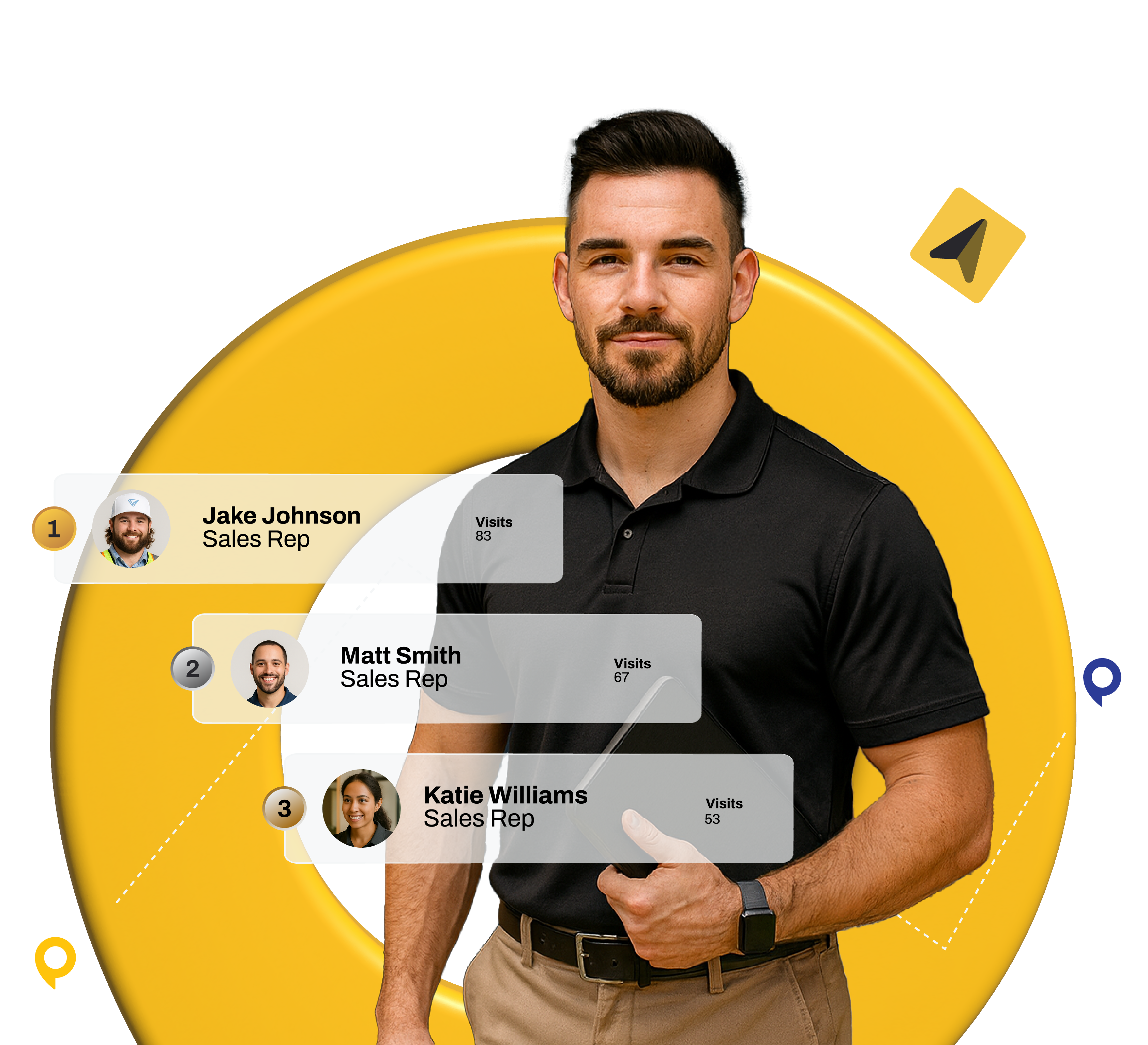
SPOTIO’s performance analytics and leaderboard features give managers visibility into visits logged, doors knocked, calls made, and deals closed — broken down by rep, by territory, or by time period. The data tells you where to focus your coaching time.
Coach on Homeowner Objections
Home improvement reps hear the same objections repeatedly. Build a short list of the top three or four, script the responses, and role-play them weekly. This is the fastest way to improve close rates across the entire team.
The most common ones:
- “I need to get more estimates.” Usually means the homeowner isn’t convinced your price is fair. Reps who present scope, timeline, and warranty side-by-side with cost — rather than just handing over a number — reduce this objection significantly.
- “We’re not ready to commit right now.” Often a financing concern in disguise. Reps trained to respond with monthly payment options instead of discounting keep margins intact and move the deal forward.
- “Let me talk to my spouse.” A scheduling problem, not a rejection. Set the expectation upfront that both decision-makers should be present, or offer to schedule a follow-up visit when both are home.
Refer to our sales objecting handling guide for a deeper exploration.
Accelerate Home Improvement Sales with SPOTIO
The process above works because it replaces guesswork with structure — in prospecting, territory design, daily execution, and coaching. SPOTIO gives home improvement field sales teams the platform to run that process: Lead Machine for residential prospecting, territory management for coverage and accountability, one-tap activity logging or voice-to-CRM with GPS verification, and AutoPlays for multi-touch follow-up sequences that reps enroll leads into.
Request a custom demo to see how it works for your team.
Frequently Asked Questions
Start with a defined ICP that includes neighborhood-level signals like home age and ownership status. Build territory-specific prospect lists, enforce daily activity minimums, re-canvass to reach 66–75% contact rates, and coach reps using activity data rather than gut instinct. Teams that follow a structured process consistently outperform those relying on individual effort alone.
Close rates vary by sub-vertical and deal size, but most home improvement field sales teams target 20–35% on qualified appointments. Contractors with structured multi-touch follow-up routinely push into the 30–40% range. If your close rate is significantly below 20%, the issue is usually upstream — either lead quality, pitch structure, or the canvasser-to-closer handoff. Pull your conversion data by stage to find the drop-off point.
Start with ICP filters, assign territories with clear boundaries, set daily activity minimums, and build a pitch that covers scope, timeline, and financing upfront. Most teams can implement this framework within two to four weeks — week one for territory setup, week two for activity standards and logging, weeks three and four for re-canvassing cadence and a coaching rhythm.
Most reps connect with only about 30% of homeowners on a single pass. Plan for two to three passes per territory to reach 66–75% contact rates. Use color-coded pin statuses to track which doors are untouched, which had no answer, and which have scheduled follow-ups so each pass is targeted rather than redundant.
Focus on leading indicators: doors knocked, appointments set, follow-ups completed, and proposals delivered. Then tie them to lagging indicators: close rate, average deal size, and revenue per territory. The combination tells you whether a rep has an effort problem, a skill problem, or both — and where to direct coaching.

Trey Gibson is the founder and CEO of SPOTIO, where he helps sales leaders build more efficient, high-performing field sales teams. With a background in entrepreneurship and as the founder of a roofing company, Trey brings hands-on experience leading door-to-door and B2B sales organizations. He combines real-world sales leadership with a passion for technology and operational efficiency to help teams scale, perform, and win more deals.