
When reps miss quota three quarters running, the instinct is to look at product-market fit or territory splits. Usually, though, the problem is closer to home.
In the 2026 SPOTIO State of Field Sales Report, 38% of respondents cited insufficient activity as the primary reason reps miss targets, 24% point to problems with reps following the sales process, and just 57% of teams are hitting their appointment goals. The data says the same thing field managers already feel in their bones: when accountability breaks down, the pipeline follows.
This guide covers what accountability actually looks like for field teams, why traditional approaches fail when your reps work independently, and seven strategies that produce results without turning you into a micromanager.
What Sales Accountability Means for Field Teams
Sales accountability is the system you build so every rep takes ownership of their numbers, their process, and their territory. It means reps solve problems before you flag them, follow through on commitments, and take initiative instead of waiting for direction.
For inside sales, that’s straightforward. Your team works in the same room (or at least the same Zoom). You see pipeline movement in real time. Coaching happens naturally.
The Autonomy-Visibility Paradox
Field sales is a different game. Your reps work alone, often hours from the office. You don’t see them struggling with objections or cutting corners on territory coverage. Without a system to surface what’s actually happening in the field, you’re managing blind.
Here’s the paradox: the independence that makes field reps effective is also what makes accountability difficult. Too much oversight and you kill the autonomy that drives performance. Too little and you don’t catch problems until they’ve already cost you pipeline.
The answer isn’t choosing one over the other. It’s setting up your team so both work together.
Why Field Sales Leaders Struggle with Accountability
Only one in three field sales leaders report that more than 70% of their team is consistently hitting quota. And the gap between high-performing and low-performing teams maps directly to accountability infrastructure.
When accountability is missing, the problems compound fast:
- Managers can’t tell whether reps are struggling with technique or effort
- Territory overlap means reps contact existing customers with acquisition offers, wasting margin
- Uneven workloads set some reps up to fail while others coast
- Communication gaps delay course correction until it’s too late
- Top reps leave for environments where their effort is recognized
The cost isn’t abstract. Field sales teams spend only 43% of their day on actual selling activities (37% in-person, 6% virtual), according to the 2026 data. The rest goes to admin, travel, and everything that isn’t selling. Without accountability for how reps spend their selling time, that ratio only gets worse.
7 Strategies to Build Sales Rep Accountability
1. Set Activity Standards, Not Surveillance
The distinction matters. Activity standards give reps a clear target for what “a good day” looks like. Surveillance tells them you don’t trust them.
Start by mapping the daily activities that predict outcomes for your team: calls made, in-person visits completed, follow-ups sent, doors knocked. These are leading indicators that reps can control, even when they can’t control which calls convert.
Set a specific, measurable daily standard. “Be more productive” doesn’t work. “10 logged activities per day, five days a week” does.
One medical services company proved this out. Palmetto Infusion had a field sales platform in place but no compliance framework, no activity standards, and no link between platform usage and compensation. Reps had zero structural reason to use it, so the data was “all window dressing.”
Palmetto Infusion defined a specific daily standard and built visibility across the organization. Within a year, face-to-face interactions logged climbed 612%, platform adoption more than doubled, and patient admissions grew across Palmetto’s 40+ clinic network. Every gain came from utilization, not headcount.
The lesson: when reps know exactly what’s expected and can see their own numbers, accountability becomes a habit rather than a mandate.
2. Design Territories That Create Fair Accountability
Poorly designed territories undermine accountability before it starts. If one rep has 200 viable accounts and another has 50, comparing their performance is meaningless.
Ask these questions when evaluating territory assignments:
- Is workload distributed evenly across reps?
- Does every territory offer equal earning potential?
- Is there a balanced mix of existing accounts and new prospects?
- Do travel times allow reps to maximize selling hours?
When territories are balanced, performance differences reveal coaching opportunities. When they’re unbalanced, they reveal nothing except bad planning.
Use territory performance data to refine assignments regularly. Track leads per zone, conversion rate by rep, and time spent per area. Clear boundaries also eliminate disputes over lead ownership, which is one of the fastest ways to kill team morale.
3. Use Peer Leaderboards for Lateral Accountability
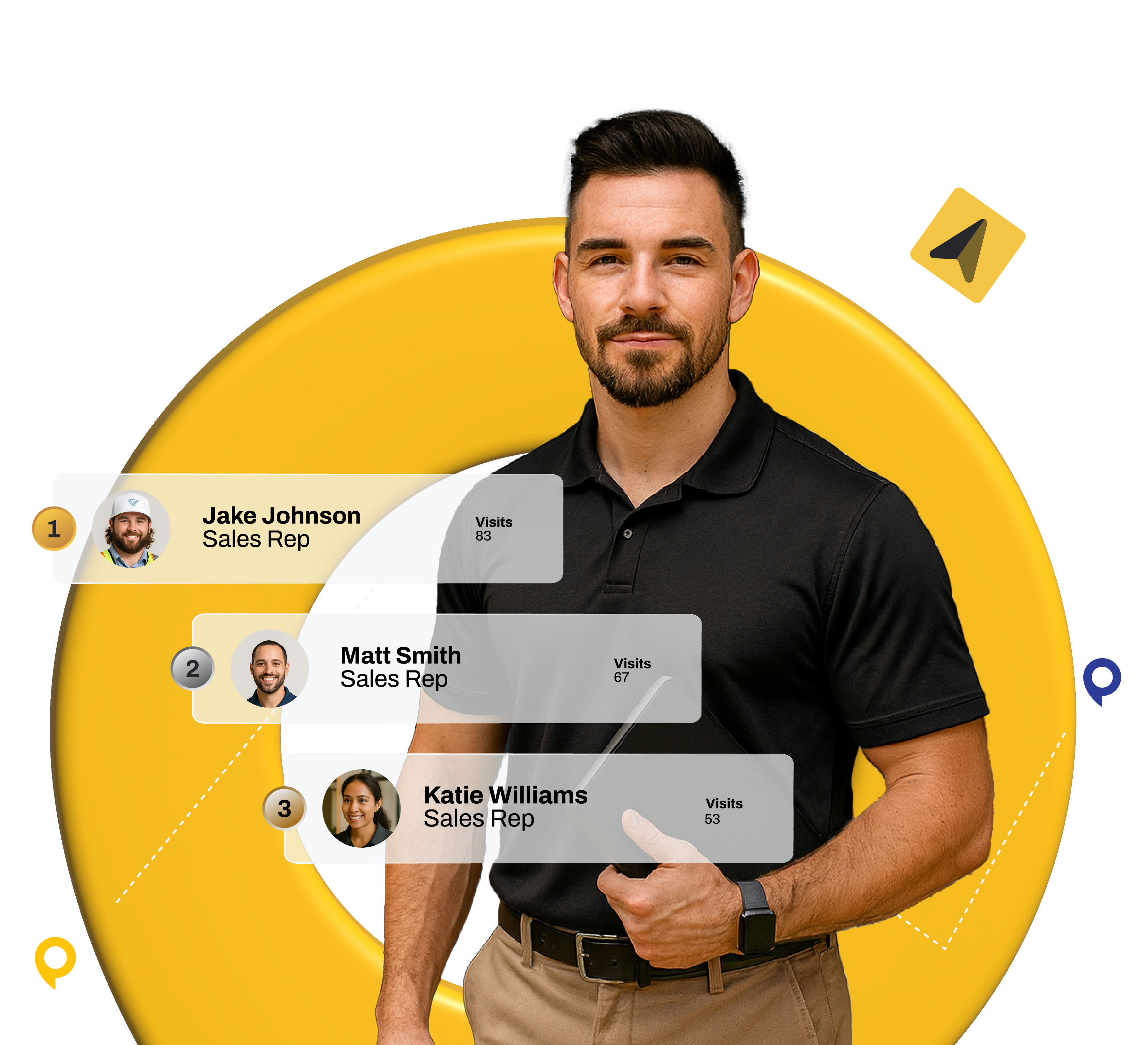
Manager pressure gets compliance. Peer pressure gets effort. When reps see how their activity and results stack up against teammates, most will push harder on their own.
The psychology is straightforward: lateral accountability develops when everyone sees what each team member is doing and what goals they need to hit. Reps don’t want to be the one dragging the team down. That motivation is often stronger than anything a manager says in a 1:1.
The caveat: public dashboards backfire when territories are unbalanced or goals are unrealistic. Before making performance visible, make sure everyone has a fair shot at success. Otherwise, you’re just spotlighting reps who were set up to fail.
4. Match Coaching Intensity to Rep Experience
Some reps are truly autonomous. They know their accounts, they manage their time well, and they consistently deliver. They’ve earned the right to work with minimal oversight.
Most reps, though, want to succeed but need structure, guidance, and coaching to get there. Treating both groups the same is a mistake.
High performers earn more freedom through results. New or struggling reps need direct coaching on fundamentals: ride-alongs, role plays, call reviews, and weekly accountability check-ins.
For reps in the middle, use questions that build self-accountability: “What went well this week?” “Where did you lose momentum?” “What’s your plan to cover your open territory next week?” When reps internalize the principles behind their actions, they handle future situations without needing you to intervene.
5. Build a Weekly Accountability Rhythm
Quarterly reviews don’t build accountability. They build surprise and resentment. Replace them with a consistent cadence everyone can count on:
- Daily: Reps log activities at the end of each field day
- Midweek: Manager reviews pipeline movement and flags stalled deals
- Weekly 1:1: 20-minute check-in focused on patterns, not individual missed tasks
- Monthly: Territory coverage review; adjust assignments if data shows gaps
- Quarterly: Broader performance review with goal-setting for next period
When the rhythm is predictable, managers don’t need to interrupt reps with “where are you?” messages. Reps know when their activity will be reviewed and what they need to have ready.
6. Make Data Self-Serve for Reps
Reps who can see their own metrics in real time don’t need their manager to tell them they’re behind. They already know.
Give reps access to dashboards showing how their activity and results have changed over time. This creates a baseline: if they see a dip relative to the previous month, they can self-correct before it becomes a coaching conversation.
Self-serve data also eliminates performance review surprises. When reps track their own progress, they walk into 1:1s prepared to discuss what’s working and what isn’t. That changes the dynamic from interrogation to collaboration.
7. Lead by Example
Reps watch what you do, not what you say. If you expect them to log every activity, you need to review those logs consistently. If you expect them to follow the sales management process, you need to demonstrate it yourself.
The field equivalent of call shadowing is the ride-along. Join reps on difficult appointments. Make cold calls alongside them. Take responsibility for your own mistakes publicly. When you meet the same standards you set for the team, you earn the credibility to hold them accountable.
The most effective field sales organizations don’t choose between autonomy and accountability. They combine them: reps get freedom over how they work, managers get visibility into what’s working, and coaching happens before small problems become missed quarters.
How Technology Supports Sales Accountability
The strategies above work with any stack. But when you’re managing 10, 20, or 50+ field reps across multiple territories, doing it manually breaks down fast.
SPOTIO is built for exactly this challenge. It combines the visibility managers need with the mobile-first workflow reps actually use in the field:
- Activity Tracking: One-tap activity logging or voice-to-CRM with GPS verification shows what reps accomplished without surveillance. Reps log a visit, call, or note with one tap from their phone, or with AI-assisted voice entry between stops. That eliminates “where were you?” conversations and lets you coach to technique rather than effort.
- Territory Management: Assign and visualize territories using performance data. Clear boundaries reduce lead-ownership disputes and color-coded views show coverage at a glance.
- Leaderboards: Rank reps by activities, appointments, or deals closed. Visible performance creates the peer accountability that drives daily effort.
- Performance Analytics: Custom reporting on conversion rates, sales cycle length, and team performance so both managers and reps can see what’s working.
- Sales Coaching: Give managers visibility into activity patterns and performance trends so coaching conversations focus on specific behaviors, not guesswork.
The Palmetto Infusion story shows what this looks like in practice. They didn’t hire more reps. They built a compliance standard on SPOTIO, made activity data visible, and connected usage to compensation. The 612% increase in logged field interactions came from the same team doing the same work, now with a system that made accountability structural rather than personal.
Frequently Asked Questions
Sales accountability is the system managers build so reps take ownership of their activities, process, and results. For field teams, this means creating visibility into what reps accomplish in the field without micromanaging their daily movements. Effective accountability balances clear activity standards with the autonomy field reps need to work independently.
Set specific activity standards (not vague expectations), build a predictable review cadence everyone understands, and give reps access to their own performance data. Focus on activity patterns rather than individual timestamps. When the system surfaces what’s happening, managers can coach to patterns instead of chasing status updates.
Focus on leading indicators reps can control: in-person visits completed, calls made, follow-ups sent, and doors knocked. For territory performance, track leads per zone, conversion rate by rep, and coverage gaps. The 2026 SOFS data shows field reps spend just 43% of their day selling. Tracking activity metrics helps identify where the rest of that time goes.
A sales accountability system combines clear activity standards, territory management, performance dashboards, and a consistent coaching rhythm. The goal is to make field activity visible by default so managers spot problems early and reps self-correct before small gaps become missed quotas. Platforms like SPOTIO provide the infrastructure for this across distributed field teams.
Build a consistent rhythm rather than ad hoc check-ins: daily activity logging, weekly 1:1s focused on patterns, and monthly territory coverage reviews. Match frequency to experience level. Newer reps need more structure; proven performers earn more space. The key is predictability. When reps know when reviews happen, surprise check-ins become unnecessary.
Start with specific daily activity standards reps can control (visits, calls, follow-ups), not vague outcome targets. Design territories so workload and earning potential are balanced across the team. Build a predictable review cadence: daily activity logging, weekly 1:1s, monthly territory reviews. Use peer-visible leaderboards to create lateral accountability, but only after territories are fair. Match coaching intensity to experience level, and give reps self-serve access to their own performance data so they self-correct before you intervene.
Whether you call them field reps or outside sales reps, the principle is the same: track what they accomplish, not where they are every minute. The distinction is activity verification vs. surveillance. Set a clear daily standard (e.g., 10 logged activities per day), make performance data visible to reps and managers alike, and replace ad hoc check-ins with a predictable weekly rhythm. When reps see their own numbers and know when reviews happen, most self-correct without a manager intervening. Palmetto Infusion grew logged field interactions 612% using exactly this approach, with no increase in headcount or manager oversight hours.

Scott Shapiro is President of SPOTIO and a seasoned sales and revenue leader with more than two decades of experience scaling high-performance sales organizations. Before joining SPOTIO as Chief Revenue Officer, he held CRO roles at PowerDMS and Igloo Software, and spent nearly 11 years at Paycor progressing from Area Sales VP to VP of Sales. A 9-time President's Club qualifier — recognized as the top sales executive or leader in his organization 6 of those years — Scott brings deep expertise in sales management, revenue operations, and go-to-market strategy. He holds an MBA from the University of Notre Dame and a B.S. from the University of Cincinnati.
Research and drafting assisted by AI tools; all content is reviewed, fact-checked, and approved by Scott and the SPOTIO editorial team.