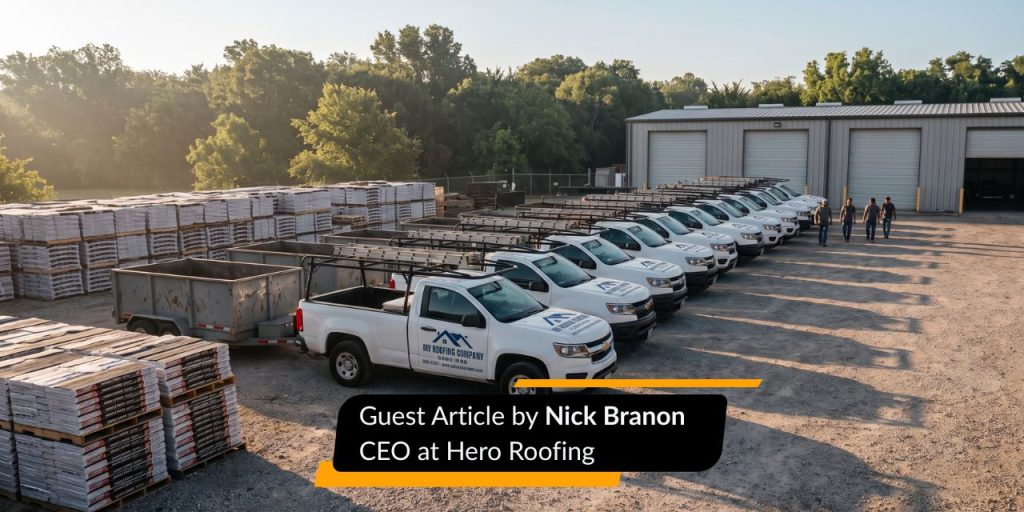
I started Hero Roofing with my dad. He came from commercial HVAC; I came from sales at another roofing company. We opened the business together, and to me, that was the American dream.
A few years later, we sold it.
Hero Roofing was acquired for $8 million through a private equity platform. We started from zero, scaled to $12 million in revenue, and built the kind of business that attracted buyers before we were even looking. By the end, we had nearly a buyer a day reaching out to us.
But the path from startup to exit wasn’t clean, and the lessons that mattered most came from the mistakes we made along the way. The biggest one: we once did $7 million in revenue and took home almost nothing. That year taught me more about building a sellable business than any adviser ever could.
We Did $7 Million and Took Home Almost Nothing
In March 2021, an EF4 tornado hit Newnan, Georgia, about half a mile from our office. It sat over the town for 30 minutes. It was one of the worst tornadoes to hit Georgia in years. Like a bomb went off.
We jumped in. Our sales guys put on hard hats and tarped houses for two weeks straight, including Sundays, which I had never believed in working before that. We helped families with roofing, siding, masonry; whatever they needed, we were there. We sent an automated letter from our CRM to every existing customer letting them know we’d take care of them and to be patient with us.
That year, we went from $3.6 million in revenue to $7 million. Sounds like a win, right?
My dad and I split about $170,000 in take-home cash. That’s it. On $7 million.
We had stretched ourselves too thin. We didn’t have the back office to chase insurance supplements. We didn’t have the accounts receivable process to handle the volume. We were doing change orders on the fly because adjusters told us to “just do it and send a bill,” and months later, new desk adjusters denied those same claims after the work was already done.
The lesson was brutal but simple: revenue is not profit. You can double your top line and end up worse off if your systems can’t support the volume. Don’t bite off more than you can chew.
But here’s the thing. That year was also the most important year in our company’s history for a different reason. We became a staple in our community. We printed “Newnan Strong” shirts. We did jobs at cost for nonprofits. We showed up when people needed help. The very next year, we did over $9 million and continued to scale. It was the best branding investment we ever made. We just didn’t plan it that way.
The Systems Buyers Actually Care About
After the tornado year, I got serious about systems. Not because I knew we’d sell someday, but because I knew we couldn’t survive another year of that chaos. It turned out that what we built to protect ourselves is exactly what made us attractive to buyers.
One Flowchart, Lead to Closeout
We built a complete flowchart of every step in the customer experience, from the moment someone calls in or a rep knocks on their door through the final closeout. One full system. Every single step mapped.
Then we broke it down into micro processes: what’s the process for pulling a permit? For ordering material? For scheduling a crew? For closing out accounts receivable?
Buyers cared about two things more than anything: our sales process and our fulfillment process. They wanted to see that what we sold, we could deliver, close out, and get paid for in a timely manner. Most roofing companies have one or the other. They’re either good salespeople or good contractors. The companies that sell are the ones that can prove both sides work.
When Your Sales Process Becomes Your Sales System
One thing we did in our CRM that made a real difference: when a sales rep made an estimate, that estimate automatically converted into a work order that went to the supplier and the crew. The sales manager reviewed it for accuracy and margin before it went to production. If the rep missed something in the estimate, he found out before the job was built, not after.
That’s the difference between having a sales process and having a sales system. A process is how your team sells. A system is how the business captures, verifies, and fulfills what was sold, automatically and consistently, without the owner touching every deal.
What Breaks When You Scale
Every roofing company hits breakpoints as it grows. Here are the two that almost killed us.
Commission payments. Early on, I would go through each rep’s jobs, calculate their commissions by hand, and write them a check. That worked with five reps. By the time we had fifteen, it was a nightmare. We went from manual calculations to an Excel process to an automated system in our CRM where commissions were calculated the moment a job was sold and the margin was visible. If you’re still doing commissions by hand, you’ll break at ten to fifteen reps. Build the automation before you need it.
Production scheduling. We prided ourselves on telling every customer we were only two weeks out when they signed up. We maintained that promise as we scaled from one or two roofs a week to five or six roofs a day. But keeping that promise required completely rebuilding our scheduling, permitting, material ordering, and crew management processes multiple times. The processes that work at one or two roofs a week will absolutely not work at five a day. Every system has to scale around the customer commitment you’ve made.
The Revenue Mix That Attracts Buyers
We started as an insurance-based roofing company. Most roofers do, because it’s easier to get a homeowner to say yes when they’re not spending their own money.
By the time we sold, roughly 75% of our revenue was retail: homeowners paying out of pocket. That shift happened naturally as our brand grew. People recognized us in the community, they checked our Google reviews, and they called us. We didn’t have to convince them to file a claim.
That revenue mix mattered enormously to buyers. Insurance-based businesses have revenue that swings with the weather. A great storm year means big numbers; a quiet year means a dip. Most PE buyers are looking exclusively for retail roofing companies because the revenue is more predictable. They want a business that’s going to be there and growing no matter what the weather does.
We still had a storm response process, and we’d still work storm damage when it came. But we didn’t build our business around it. That consistency is what buyers pay for.
What Most Roofing Owners Get Wrong
The thing I see owners get wrong most often is thinking they’re ready to sell based on their revenue number alone. They hit $10 million or $15 million and think that’s the ticket.
It’s not.
What buyers care about more than your top-line revenue is a clean and healthy EBITDA with systems and processes that are repeatable. They want to see that the business works without you running everything personally. If your company is heavily dependent on you, that steers a lot of buyers off. They’re not buying you; they’re buying a business that runs. For a deeper look at what PE firms actually evaluate during this process, read what PE buyers look for in a roofing business.
The other mistake is dirty books. I’ve seen companies doing $20 to $30 million get into due diligence and the deal falls apart because their financials aren’t clean. Personal expenses mixed in. Revenue not broken down by trade. No clear P&L by month or quarter. If a buyer asks for a report and you have to go build it from scratch, you’ve already lost credibility. Have it ready.
What Got Us to the Finish Line
Looking back, a few things made the difference between our exit happening and no deal at all.
Strong marketing and branding. We were ingrained in our community. When buyers looked us up online, we were at the top of local search. We had strong Google reviews. Our brand looked bigger than we were, and that attracted attention. We had nearly a buyer a day reaching out before we even formally engaged.
A consistent team with low turnover. All of our reps were veterans who had been with us for a long time. They all used the same proven sales process with every customer. Buyers love stability; they’re not just buying your revenue, they’re buying the team that produces it.
Clean systems from lead to closeout. Every step documented. Every process repeatable. That’s what let us demonstrate to a buyer that Hero Roofing would keep running after the deal closed.
Building the Data Layer That Proves Your Business Works
Everything I’ve described, the systems, the processes, the revenue tracking, comes down to one thing: can you prove it?
A buyer isn’t going to take your word for it. They want data. They want to see lead sources and their ROI. They want revenue broken down by trade (roofing, gutters, siding, chimney caps). They want P&L statements by month, by quarter, by year, both accrual and cash basis. They want to see your commission structure and how it scales. They want to see your scheduling capacity and your production throughput.
When we went through due diligence, it took six months. Part of that was because I didn’t have all of this pre-organized. They asked for the same thing five different times, six different ways, and I had to go find it every time. If I did it again, I’d have a data room ready before the first conversation.
The foundation of all of this is visibility into what’s happening in the field. If your reps are logging activity, if your CRM is tracking lead sources, if your territory coverage is mapped, if your pipeline is visible from first contact to signed contract, you can answer every question a buyer asks with data, not stories.
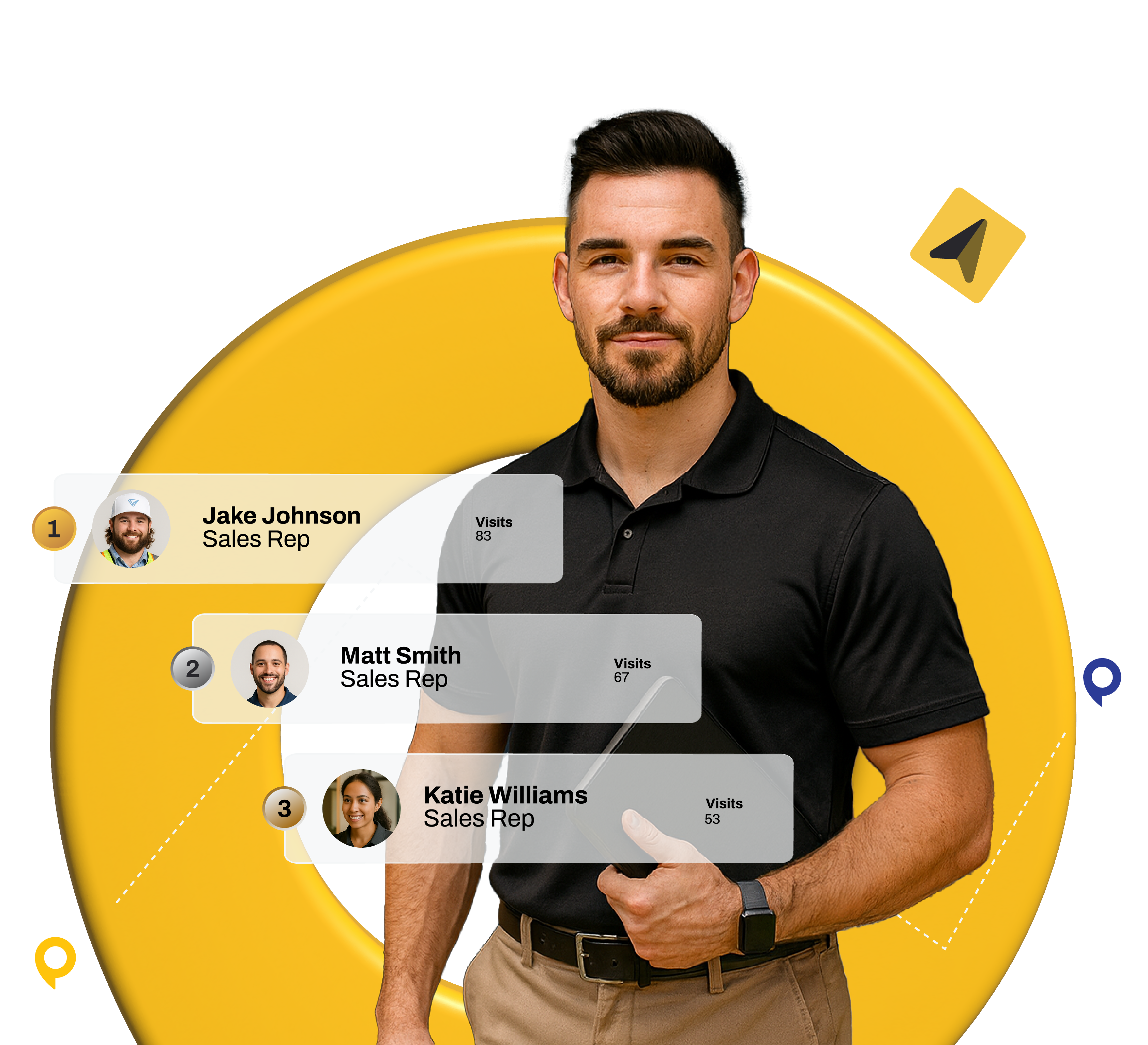
SPOTIO is the platform that makes this visible. One-tap activity logging or voice-to-CRM with GPS verification means your field data is clean and current without reps spending hours on manual entry. Territory management shows coverage and capacity. Pipeline reporting gives you the lead-to-contract visibility that both your managers and your future buyers need. And when you’re running leaderboards and tracking rep-level performance over time, you’re building the kind of operational proof that PE firms pay premiums for.
If you’re scaling toward an exit and want to build the field visibility layer that buyers look for, request a demo.
Frequently Asked Questions
There’s no fixed timeline. We went from startup to acquisition over about six years, but the real preparation happened in the last two to three years as we formalized systems, shifted our revenue mix toward retail, and built a consistent team. Start building your systems and cleaning your books well before you’re ready to sell.
Most PE firms are looking at $10 million and above. We were the smallest company in our acquiring platform’s portfolio; every other company was roughly twice our size. Getting to $10 million is about having clean EBITDA and repeatable systems, not just chasing a top-line number.
Yes, in most cases. PE buyers prefer retail revenue because it’s more consistent and predictable. Insurance-based revenue swings with the weather, and a quiet storm year can cause a significant dip. A shift toward retail, where customers are paying out of pocket because they trust your brand, makes the business more attractive.
Thinking the revenue number is what matters. Buyers care about clean EBITDA, documented and repeatable systems, and a business that isn’t dependent on the owner. I’ve seen $20 to $30 million companies fail due diligence because their books weren’t clean.
Yes. I did the transaction with only a legal team and no adviser. Due diligence took six months, I was pulled out of the business during that time, and in hindsight, an adviser could have negotiated a higher multiple and managed the process so I could stay focused on running the company.
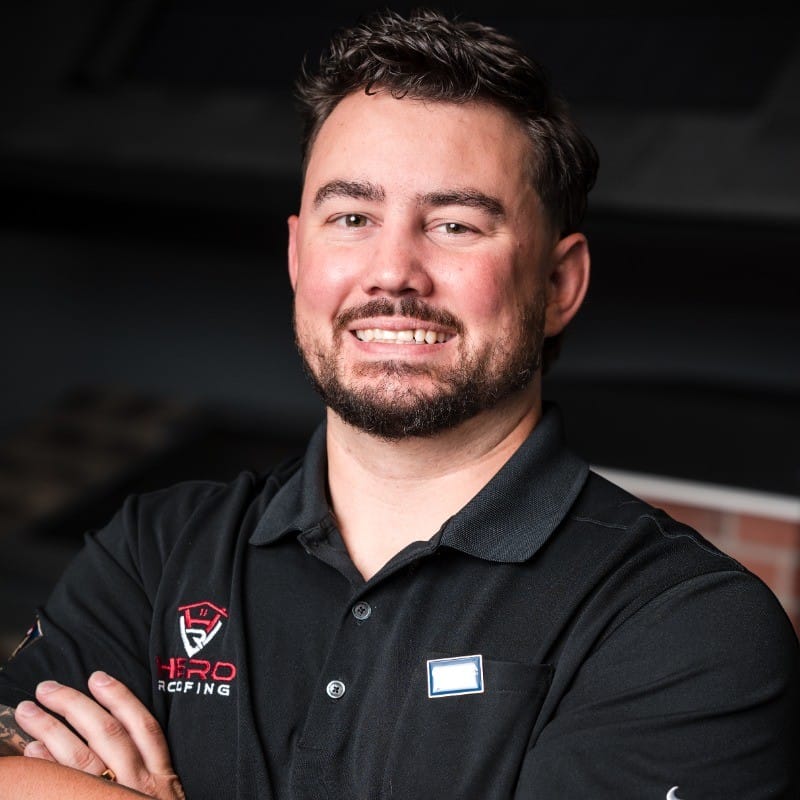
Nick Branon is co-founder and CEO of Hero Roofing in Newnan, Georgia. He started the company in 2018 with his father Todd, and joined the private-equity-backed Omnia Exterior Solutions platform in 2024. He remains CEO. Through his consulting practice, The CEO Hero, he now coaches roofing and contractor owners on the leadership problems that come with growth.